 90%
 USA
 Canada
 Australia
 UK
Different Kinds of Poker – Games and Variants

Disclosure: Our mission is to connect you with the best gambling sites and informational resources available. If you click one of the links on our site, we may earn a commission payment at no extra charge to you. For more information, see our affiliate disclaimer and editorial policy.
Poker games draw the kind of following that few other card tables ever get near. There are so many ways you can play, whether it’s Texas Hold’em, Omaha, or Stud, and each version brings its own rules and approach to reading opponents.
This guide walks you through everything you need to know about playing real money poker games. We’ll break down the main types, explain how each popular variant works, and show you where to find the most trusted US sites to put your skills to work.
Play Online Poker Games




Types of Poker Games
Check out any online casino’s poker section, and nearly everything falls into three broad types: Community Card Poker, Stud Poker, or Draw Poker. Every version, whether it’s Texas Hold’em or one of the newer formats, builds off those mechanics. That shapes how cards get dealt, when they hit the table, and how much of the hand stays hidden versus shared.

Draw Poker
Draw Poker is about as old-school as it gets. You get your full hand upfront, all hidden from the other players. After checking your cards, you’ve got one shot to swap as many as you like for new ones from the deck. That’s the ‘draw.’ The objective is to improve your hand and hope it beats the rest.
The rules that make draw poker are simple enough for beginners to latch onto. What is actually tricky is the lack of visible information. Look at the most popular version, Five Card Draw. You’ve got nothing to lean on (exposed cards, shared board, etc.). It all comes down to reading people if you’re playing others, or knowing the odds and making smart choices on what to keep or swap when it’s you versus the house.
Stud Poker
Stud Poker deals cards in stages. Some stay face down, meaning only you see them, the rest are laid out for everyone to follow. You cannot replace or exchange anything along the way, so every decision depends on your current hand and what you’ve seen unfold.
Most versions, like Seven-Card Stud, follow a fixed-limit structure where bet sizes rise at set stages during play. Each player antes ahead of the deal. That means there’s always money in the pot to fight for, even before anyone voluntarily commits chips. Once the action starts, players take turns betting or folding as new cards are revealed. There’s even Mississippi Stud Poker, an underrated casino game that can be a lot of fun for Stud Poker enjoyers.
Community Card Poker
Community Card Poker revolves around shared cards placed face up in the center of the table. Every player gets their own private hand, but the final combination always uses a mix of personal and community cards. You build the best possible five-card hand by blending the two.
Games like Texas Hold’em and Omaha follow this setup, with community cards revealed in stages, usually known as the flop, turn, and river. Because everyone sees the same board, the edge comes from masking your hand and forcing action when the community cards start shaping likely combinations.
Most Popular Poker Games
Poker comes in many forms, but the biggest differences usually come down to how cards are dealt, how many cards you can use, and what type of hand wins. Some variants use community cards, while others rely entirely on private cards or draw rounds.
The rules below cover the most common formats and show how each one plays from the deal through the showdown.

Texas Hold’em
Texas Hold’em is the most widely played poker format and appears across online poker rooms, live cash games, and major tournaments. Each player receives two private hole cards, while five shared cards are dealt to the board across the flop, turn, and river.
Best for: Players who enjoy decision-making, reading opponents, and adjusting their strategy as a hand develops.
How to play Texas Hold’em:
- Each player receives two private hole cards.
- A betting round takes place before any community cards are dealt.
- The dealer reveals three community cards on the flop, followed by another betting round.
- One card is dealt on the turn, then another on the river, with betting after each.
- Remaining players make the best five-card hand using any combination of their hole cards and the board.
- The strongest hand wins at showdown unless every other player folds first.
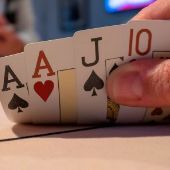
Omaha
Omaha poker uses the same community-card structure as Hold’em but gives each player four hole cards instead of two. The main rule difference is that you must use exactly two hole cards and exactly three community cards to build your final five-card hand.
Best for: Players who enjoy action-heavy games, frequent draws, and more complex hand combinations.
How to play Omaha:
- Each player receives four private hole cards.
- A betting round takes place before the flop.
- Three community cards are dealt on the flop, followed by another betting round.
- The turn and river are dealt one card at a time, with betting after each.
- Players must use exactly two hole cards and exactly three board cards.
- The highest five-card hand wins the pot at showdown.

Omaha Hi-Lo
Omaha Hi-Lo, or Omaha 8 or Better, follows the same basic structure as Omaha but can split the pot between the best high hand and the best qualifying low hand. Players still receive four hole cards and must use exactly two of them with exactly three community cards.
Best for: Players who enjoy split pots and evaluating both high and low possibilities within the same hand.
How to play Omaha Hi-Lo:
- Each player receives four private hole cards.
- Betting takes place before the flop.
- The flop, turn, and river are dealt with betting after each stage.
- Players use exactly two hole cards and three community cards for the high hand.
- A qualifying low must contain five different cards ranked eight or lower.
- Different combinations of two hole cards may be used for the high and low hands.
- The pot is split between the best high and best low when a qualifying low exists.
- If no low qualifies, the high hand wins the entire pot.
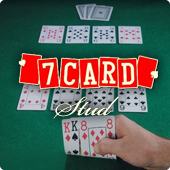
Seven-Card Stud
Seven-Card Stud doesn’t use community cards. Each player receives their own mix of face-up and face-down cards over several betting rounds, which makes tracking exposed cards an important part of the game.
Best for: Players who enjoy slower, information-heavy poker and paying close attention to the cards other players have shown.
How to play Seven-Card Stud:
- Each player starts with two cards face down and one card face up.
- The first betting round begins after the opening three-card deal.
- Players receive three more face-up cards, one at a time, with betting after each.
- A seventh and final card is dealt face down.
- One final betting round takes place.
- Players choose the best five-card hand from their seven cards.
- The strongest five-card hand wins at showdown.

Seven-Card Stud Hi-Lo
Seven-Card Stud Hi-Lo, or Stud 8 or Better, combines the standard Stud deal with a split-pot structure. The high half uses normal poker rankings, while the low half requires five different cards ranked eight or lower.
Best for: Stud players who enjoy tracking exposed cards while considering both high and low hand possibilities.
How to play Seven-Card Stud Hi-Lo:
- Each player receives two cards face down and one card face up.
- Betting starts after the first three cards are dealt.
- Three more face-up cards are dealt individually, with betting after each.
- The seventh card is dealt face down.
- Players make the best five-card high hand and, when possible, a qualifying low hand.
- A low must contain five different cards ranked eight or lower.
- The pot is split between the best high and best low.
- If no low qualifies, the high hand takes the full pot.

Razz
Razz poker uses the same basic dealing structure as Seven-Card Stud, but the lowest five-card hand wins. Aces count as low, while straights and flushes don’t count against you. A-2-3-4-5 is the best possible Razz hand.
Best for: Players who want a lowball game that rewards patience, card tracking, and a different view of hand strength.
How to play Razz:
- Each player receives two cards face down and one face up.
- Betting starts after the opening deal.
- Three more face-up cards are dealt individually, with betting after each.
- The seventh card is dealt face down.
- Players make the lowest possible five-card hand from their seven cards.
- The lowest hand wins the pot.

Five-Card Draw
Five-Card Draw is one of the simplest poker formats because there are no community cards or multiple board streets. Every player works with their own private hand and gets one chance to replace unwanted cards before the final betting round.
Best for: Beginners who want straightforward poker rules without community cards or several betting streets.
How to play Five-Card Draw:
- Each player receives five private cards.
- A betting round takes place after the initial deal.
- Players choose which cards to keep and which to discard.
- The dealer replaces discarded cards with new cards from the deck.
- A second and final betting round follows the draw.
- Remaining players reveal their hands.
- The strongest five-card poker hand wins the pot.

Short Deck Hold’em
Short Deck Hold’em, or Six Plus Hold’em, uses a 36-card deck with the twos through fives removed. Players still receive two hole cards and use five community cards, but the shorter deck changes hand probabilities and can affect the ranking order used at some tables.
Best for: Hold’em players who want a faster, more action-heavy version of a familiar game.
How to play Short Deck Hold’em:
- Each player receives two private hole cards.
- A betting round takes place before the flop.
- Three community cards are dealt on the flop.
- The turn and river are dealt one at a time, with betting after each stage.
- Players make the best five-card hand using their hole cards and the board.
- The strongest hand wins at showdown.
*Note: Check the table rules before playing because some Short Deck games rank flushes above full houses.
2-7 Triple Draw & Badugi
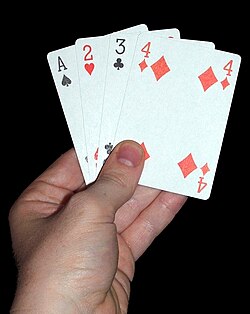
2-7 Triple Draw and Badugi are both draw poker games, but they use different hand-ranking systems. In 2-7 Triple Draw, the lowest five-card hand wins, aces count as high, and straights or flushes work against you, making 7-5-4-3-2 the best possible hand.
Badugi uses four cards, with the strongest hands made up of four different ranks and four different suits. Lower cards are better, and A-2-3-4 in four different suits is the best possible Badugi hand.
Best for: Players who enjoy draw poker, lowball hand rankings, and making careful decisions about which cards to keep or replace.
How to play 2-7 Triple Draw:
- Each player receives five private cards.
- A betting round takes place before the first draw.
- Players can discard any number of cards and receive replacements.
- The draw-and-bet process happens three times.
- The lowest five-card hand wins.
- Aces are high, while straights and flushes count against you.
How to play Badugi:
- Each player receives four private cards.
- A betting round takes place before the first draw.
- Players may discard unwanted cards and draw replacements.
- Up to three drawing rounds are normally played.
- The goal is to make the lowest hand with no repeated rank or suit.
- A four-card Badugi beats any three-card hand.

H.O.R.S.E. & Other Mixed Formats
H.O.R.S.E. is a mixed-game format that rotates through five poker variants instead of sticking with one ruleset. The name stands for Hold’em, Omaha Hi-Lo, Razz, Seven-Card Stud, and Seven-Card Stud Hi-Lo.
Best for: Experienced players who already understand several poker variants and enjoy switching between different styles of play.
How to play H.O.R.S.E.:
- Play begins with Limit Hold’em.
- The rotation moves to Omaha Hi-Lo.
- Razz comes next.
- Seven-Card Stud follows.
- Seven-Card Stud Hi-Lo completes the rotation.
- The sequence then starts again.
- The game normally changes after a set number of hands or after a full table rotation, depending on the room.
- Other mixed formats can include 2-7 Triple Draw, Badugi, or Pot-Limit Omaha. Each game keeps its own rules, so players have to adjust to different hand values, betting structures, and ways of building a winning hand.’
Poker Cash Games vs. Tournaments
Poker cash games and tournaments both run off the same basic rules, yet differ a lot in how each format unfolds and what players need to focus on to succeed. Here’s how they both work:
Core Poker Rules & Betting Actions
Most poker games use the same basic actions and table structure, even when the cards or winning conditions change. Players take turns betting, calling, raising, or folding while trying to build the strongest hand or convince opponents to give up theirs. Forced bets such as blinds and antes help create action from the start.
Once you understand these shared rules, moving between games such as Texas Hold’em, Omaha, and Seven-Card Stud becomes much easier.
Dealer Button, Blinds, & Antes Explained
The dealer button marks the dealer position and usually moves one seat clockwise after every hand. In games such as Texas Hold’em and Omaha, the two players to the left of the button normally post the small blind and big blind. These forced bets place chips into the pot before any cards are dealt.
Antes are another type of forced bet and are commonly used in tournaments or certain poker variants. An ante may be paid by every player or collected through a big blind ante, depending on the format. Both blinds and antes create action and prevent players from simply waiting for premium hands.
How Betting Rounds Work & How a Player Wins the Pot
A betting round follows a set order, although the exact starting position can vary by poker game. Each active player gets a chance to act, and the round continues until the remaining players have responded to the current wager.
- The first active player checks or makes the opening bet, depending on the action before them.
- Play moves around the table, with each player choosing to check, call, raise, fold, or move all-in when allowed.
- A raise increases the amount other active players must match if they want to stay in the hand.
- The betting round ends once every remaining player has matched the current wager or moved all-in.
- The game then moves to the next stage, which may involve dealing more cards and starting another betting round.
- The hand ends early if every player except one folds, giving the remaining player the pot without a showdown.
- When multiple players remain after the final betting round, they reveal their cards at a showdown, and the strongest qualifying hand wins the pot.
Check, Bet, Call, Raise, Fold, & All-In
Poker players have several possible actions during a betting round, although not every option is available in every situation. The action you can take depends on whether someone has already bet, how much is required to continue, and how many chips you have left.
| Action | What It Means | When You Can Use It |
|---|---|---|
| Check | Stay in the hand without adding more chips. | When no bet has been made during the current round. |
| Bet | Put the first wager into the pot during a betting round. | When no other player has already bet. |
| Call | Match the current bet to remain in the hand. | When another player has bet or raised. |
| Raise | Increase the size of the current wager. | When a bet has already been made and raising is allowed. |
| Fold | Give up your hand and any chips already committed to the pot. | When you don’t want to match the current wager or continue playing the hand. |
| All-In | Wager every chip you have remaining at the table. | When you choose to commit your full stack or don’t have enough chips to make a full call or raise. |
Showdowns, Side Pots, & Tied Hands
A showdown happens when two or more players remain after the final betting round. The players reveal their cards, and the strongest hand under that game’s rules wins the pot. Some variants can split the pot between different winning hands, such as high and low hands.
Side pots appear when one player goes all-in for fewer chips than other players still have available. That player can only win the part of the pot they contributed toward, while later bets form a separate side pot. More than one side pot can exist if several players go all-in for different amounts.
Tied hands occur when two or more players finish with equally ranked hands. The pot is normally divided as evenly as possible between them. Any leftover chip is awarded according to the poker room or tournament rules.
Basic Strategy Tips for Poker Games
Learning the rules tells you what actions are available, but strategy helps you decide which action makes the most sense. Strong poker usually starts with choosing better starting hands, understanding position, and recognizing when the price of a call is worthwhile. You don’t need advanced math or complicated tactics to begin making smarter decisions.
The following tips can help you play more informed poker games.
Play Stronger Starting Hands
Starting hand selection affects nearly every decision that comes later in a poker hand. Stronger opening hands are more likely to make competitive combinations and are usually easier for beginners to play. Weaker hands can leave you facing difficult calls with only a small chance of improving.
You don’t need to play every hand just because you’ve been dealt cards. Folding weaker combinations can save chips and reduce the number of difficult situations you face later. Your starting range can widen when your position improves or the table is playing cautiously.
Use Your Position to Your Advantage
Position describes when you act compared with the other players at the table. Acting later gives you more information because you can see whether opponents check, bet, or raise before making your own decision. That extra information can make it easier to control the size of the pot. Position changes every hand as the dealer button moves around the table.
- Early-position players must act with less information and usually benefit from playing stronger hands.
- Late-position players can often use a wider range because fewer opponents remain to act behind them.
Use Pot Odds, Outs, & Implied Odds to Guide Decisions
Pot odds compare the amount you need to call with the size of the pot you could win. For example, if the pot is $80 and you must call $20, you are risking $20 for a chance to win a $100 pot. This helps you judge whether the price of continuing is reasonable based on how likely your hand is to improve.
Outs are the remaining cards that could improve your hand into one you expect to win. A player with four cards of the same suit, for example, may have several outs that complete a flush. Counting those outs helps you estimate how often you are likely to improve on the next card.
Implied odds look beyond the current pot and consider chips you may win on later betting rounds if your hand improves. They can make a call more attractive when you expect an opponent to keep betting after you complete your draw. Together, pot odds, outs, and implied odds help you decide whether continuing with a drawing hand is worth the cost.
Bluff Selectively & Value Bet Strong Hands
Bluffing means betting or raising with a weaker hand in an attempt to make stronger hands fold. It can be useful, but beginners often rely on it more than they should. A bluff usually works best when your betting makes sense based on the cards and earlier action.
Value betting has the opposite goal because you want weaker hands to call when you’re likely ahead. Paying attention to opponents can help with both decisions. Look for repeated betting patterns rather than trying to read too much into one unusual play.
Adjust Your Strategy for Cash Games & Tournaments
Cash games and tournaments use many of the same rules, but the best decisions can change because of their structure. Cash-game blinds usually stay the same, and players can often rebuy when they lose their stack. That setup gives you more freedom to wait for favorable hands and situations.
Tournament blinds increase over time, which creates more pressure as your stack becomes smaller compared with the required bets. You may need to play more aggressively as the event progresses. Stack size, tournament stage, and payout structure can all influence how you approach a hand.
Manage Your Poker Bankroll
Bankroll management means setting aside a fixed amount of money for poker and choosing stakes that fit within that total. The idea is to avoid risking too much of your bankroll at once, which gives you more room to handle normal winning and losing swings.
For example, a player with a $1,000 poker bankroll might choose $0.25/$0.50 cash games instead of jumping into a $2/$5 game. At the higher stakes, a single buy-in could take up a large share of the bankroll, making one bad session much harder to absorb.
Keeping buy-ins smaller relative to your total bankroll can help you stay at comfortable stakes for longer. If that $1,000 bankroll drops to $700 after a rough stretch, moving down in stakes can reduce the amount at risk while you rebuild.
Poker funds should stay separate from money needed for rent, food, or other essential expenses. Clear bankroll limits won’t prevent losses, but they can make it easier to avoid chasing them or putting too much money into one game.
Choosing Which Poker Game to Play
For beginners, online cash games offer the most forgiving setup. You can jump in and out as you like and pick things up gradually without the pressure. Tournaments bring tougher competition and climbing stakes, but they can also be far more rewarding.
Check out the table below for more on choosing what type of poker to play:
| Game or Format | Skill Level Needed | What You Must Be Good At |
|---|---|---|
| Texas Hold’em Cash | Medium to High | Reading bets, timing plays, managing risk |
| Texas Hold’em Tournaments | Medium to High | Adjusting to blinds, shifting gears under pressure |
| Omaha Cash | High | Handling swings, calculating outs, reading strong boards |
| Omaha Tournaments | High | Discipline with loose ranges, capitalizing on big hands |
| Seven Card Stud Cash | Medium | Memory, tracking exposed cards, patient hand selection |
| Razz | High | Spotting board strength, chasing low hands, patience |
| Sit & Go Tournaments | Beginner to Medium | Quick reads, adapting fast, survival focus |
Another key thing to look at when picking poker card games is the betting limits. These tell you exactly how much you can bet or raise during each round. The most common setups are:
- No-Limit: You can bet however much you’ve got in front of you, anytime. That’s where huge pots and fast knockouts happen. Texas Hold’em tournaments use this a lot.
- Pot-Limit: You can bet or raise up to the total size of the pot. It keeps things aggressive but not as wild as No-Limit.
- Fixed-Limit: The bet sizes are set in advance and stay steady. Raises follow a fixed amount, so pots grow more slowly.
Speed poker should also be mentioned for people who like fast action, because it’s a poker variable that lets you fold and move on to a new hand right away.
Where to Play Poker Games Online
Plenty of online casinos carry their own poker platforms packed with cash games, tournaments, and different poker variants. We’ve tested all the top sites ourselves and pulled in expert ratings and real player feedback through our Jackpot Meter.
Here are the three best online poker sites in the US right now:
Ignition Poker
Ignition Poker gives you nonstop Texas Hold’em and Omaha with cash tables for all stakes, Sit’n Go’s, and big daily tournaments. There are also weekly freerolls paying up to $2,500. Many expert reviews praise the platform’s security. It uses advanced TLS encryption, supports fast crypto payouts, and lets you play anonymously at the tables.
New players get up to $1,000 in poker bonus money, or $1,500 with crypto (no rollover), and have 30 days to unlock the funds through real play.
Licensed in: Anjouan Gaming Board

 77%
 72%
- Bonus: 150% up to $1,500
- Visit SiteRead Review
Bovada
Bovada’s one of the easiest poker sites to get comfortable with, especially if you’re new. They lay everything out clearly—how-to guides, rake details, points system, all upfront. You can even try things out in practice mode with fun money before playing for real.
The most popular poker card games here are Texas Hold’em, Omaha, and Omaha Hi/Lo. They run 24/7, plus there’s Zone Poker, Sit’n Go’s, mystery knockouts, and seven tournament types to jump into. The filters are of great help to jump straight to your preferred games, and we found their live chat support genuinely knowledgeable when it comes to poker.
Licensed in: Union of the Comoros and the Central Reserve Authority of Western Sahara

- 75%71%
- Bonus: 100% up to $500
- Visit SiteRead Review
BetOnline
BetOnline brings in some of the most advanced poker features you’ll find. The built-in Poker Odds Calculator shows real-time odds as you play, perfect for sharpening your strategy whether you’re new or experienced.
They’ve also added Six Plus Hold’em with a trimmed 36-card deck, Straddle options that raise the stakes in cash games, and Throwables for reacting mid-hand.
You’ll even find All-In Cash Out to lock profits early, plus Run It Multiple Times for extra outcomes on big hands.
Licensed in: Junta de Control de Juegos (JCJ)/Panama Gaming Control Board

- 71%67%
- Bonus: 100% up to $1,000 + 8 MTT Tickets
- Visit SiteRead Review
Casino Poker Games
Playing poker-based casino games is completely different from traditional poker against human opponents. Here, you’re competing directly with the house instead of others, and winnings come from fixed odds listed on preset paytables. Some popular examples include:
| Poker Variant | Description |
|---|---|
| Casino Hold’em | You place an ante to start. The dealer gives you two cards, then three community cards land face-up. You decide to fold or call with an extra bet. After that, two more community cards follow. Both sides form the strongest five-card combination. The dealer must show at least one pair of 4s to qualify. |
| Pai Gow Poker | You receive seven cards and split them into a five-card high hand and a two-card low hand. The five-card set must outrank the other. The dealer does the same. To win, both of your hands need to beat the dealer’s. If only one wins, it’s a push. |
| Caribbean Stud Poker | You make an ante and get five cards. The dealer draws five as well, leaving one exposed. You look at your set, then either fold or raise (doubling your bet). The dealer needs Ace-King or better to qualify. If they do, the best five-card hand wins. Payouts follow fixed odds. |
| Red Dog Poker | You bet on whether a third card will fall numerically between two cards dealt face-up. The wider the gap, the lower the payout. If the first two cards are consecutive, it’s a push; if they match, a third card determines whether you win. |
| Let It Ride | You place three equal bets and receive three cards, with two community cards revealed one at a time. Before each reveal, you can withdraw one bet or let it ride. Your final five-card hand is paid according to a fixed paytable. |
| 3 Card Poker | You receive three cards and play against the dealer, typically using an ante and optional pair-plus bet. After seeing your hand, you can fold or place a play bet. The dealer usually needs Queen-high or better to qualify. |
Online Poker Games
No matter if you’re new to real money poker games or already experienced, there’s always something that fits your style. Texas Hold’em is the classic, with Omaha throwing more cards into the mix and keeping every hand wide open. Other formats like Seven-Card Stud or Razz reward patience and sharp memory. Keeping track of exposed cards can make all the difference.
Trying different poker card game formats online is the best way to find what you enjoy the most. Sites like Bovada offer a great opportunity with ‘fun’ credits to test everything before putting anything on the line. Then when you’re ready, you can quickly make a deposit and try your luck for real money. And if the pressure against other players feels like too much, you can switch to casino poker or video poker anytime.


