 90%
90% 75%
75% USA
USA Canada
 Australia
 UK
UKPoker Introduction: Learn the Basics of Poker

Disclosure: Our mission is to connect you with the best gambling sites and informational resources available. If you click one of the links on our site, we may earn a commission payment at no extra charge to you. For more information, see our affiliate disclaimer and editorial policy.
Poker is a card game where players compete to win the pot by making the strongest hand or getting everyone else to fold. It can take time to learn because the cards are only part of the challenge, with betting decisions and table position shaping how each hand develops.
This guide shows you how poker hands work, how betting and position affect your choices, and how the main poker formats differ. It also covers basic table etiquette and shares responsible gambling resources that can help you stay healthy and in control while playing poker.





What is Poker & How Does it Work?
Poker is a family of card games built around the same basic idea: win the pot by either making the best hand or convincing everyone else to fold. What makes poker different from many casino games is that you’re playing against other people, so your decisions matter just as much as the cards you’re dealt.
The exact rules change between games such as Texas Hold’em, Omaha, and Seven-Card Stud, but the core skills stay familiar. It helps to start with the basic goal of the game before learning the rules that shape each betting decision.
The Goal of the Game

The main goal in poker is simple: win the pot. You can do that in two ways:
- Show the best hand when two or more players reach the showdown.
- Bet or raise until every other player folds.
That second option is a big part of what makes poker different from many casino card games. You don’t always need the best cards to win because a strong bet can sometimes force a better hand to fold.
Poker is also a game of incomplete information. You can see your own cards and any shared cards on the table, but you’ll usually have to judge an opponent’s hand by how they bet and react. To make those decisions effectively, you first need to understand poker hand rankings and which combinations beat others.
Basic Poker Hand Rankings
Standard poker uses the same basic hand rankings in games such as Texas Hold’em, Omaha, and Seven-Card Stud. Learning that order first makes it much easier to judge the strength of your hand and understand what combinations can beat it.
You don’t need to memorize every poker rule at once, but the hand rankings should become familiar early. They’re the foundation for deciding whether to bet, call, raise, or fold in most traditional poker games.
Poker Hands Ranked From Best to Worst
| Rank | Hand | How it’s Made |
|---|---|---|
| 1 | Royal Flush | A, K, Q, J, and 10 of the same suit |
| 2 | Straight Flush | 5 cards in numerical order, all of the same suit |
| 3 | Four of a Kind | 4 cards of the same rank |
| 4 | Full House | 3 cards of one rank, plus 2 cards of another rank |
| 5 | Flush | 5 cards of the same suit that aren’t in numerical order |
| 6 | Straight | 5 cards in numerical order, using more than one suit |
| 7 | Three of a Kind | 3 cards of the same rank |
| 8 | Two Pair | 2 cards of one rank plus 2 cards of another rank |
| 9 | One Pair | 2 cards of the same rank |
| 10 | High Card | A hand with no pair or better, ranked by its highest card |
See Also: Poker Hand Nicknames Explained
Understanding Poker Starting Hands
Your starting cards give you the first indication of how much potential a hand may have before later cards are dealt. Some combinations begin with more strength, while others rely more heavily on improving as the hand develops.
Starting-hand value can depend on factors such as matching ranks, connected cards, and high-card strength. Understanding those basic categories makes it easier to judge whether a hand has enough potential to continue or whether folding is the safer choice.
Pocket Pairs
A pocket pair means both of your hole cards have the same rank, such as two aces or two eights.
Higher pocket pairs are usually stronger because they can already beat many unpaired hands before any community cards appear.
Smaller pocket pairs can still become powerful if the deal gives you a third card of the same rank, creating three of a kind. However, they become more vulnerable when higher cards appear on the board.
Suited & Connected Cards
Suited cards share the same suit, which can give you a chance to make a flush. Connected cards sit close together in rank, such as 8-9 or 10-J, which can help form a straight.
Cards that are both suited and connected provide more ways for the hand to improve as additional cards are dealt. That extra potential can make them more useful than two unrelated low cards, although they still need favorable cards to develop into a strong hand.
High Cards
High-card strength refers to the value of the individual cards in your starting hand. Cards such as aces, kings, queens, and jacks can make stronger pairs and may already hold an advantage over lower unpaired cards.
Two high cards can provide several ways to improve as the hand develops, particularly when one pairs with a later card. However, high cards aren’t automatically strong enough to continue when the rest of the hand develops poorly or another player shows significant strength.
Common Poker Terms Beginners Should Know
Poker uses a lot of shorthand, and learning the most common terms makes it much easier to follow the action. These definitions cover the words beginners are most likely to hear at a table or see in an online game.
- Pot: The total amount of chips or money players are competing to win during a hand.
- Board: The community cards dealt face up in the middle of the table for all players to use, depending on the rules of the game.
- Hole Cards: Private cards dealt to an individual player that other players cannot see.
- Stack: The total number of chips a player currently has available at the table.
- Street: A stage of a poker hand in which cards are dealt or betting takes place, such as the flop, turn, or river in Texas Hold’em.
- Nuts: The strongest possible hand that can be made with the cards currently available.
- Kicker: A side card used to break a tie when two players have otherwise matching hands.
- Outs: Cards that can still be dealt and improve your hand into what you believe could be a winning combination.
Core Poker Rules
Poker variants may change the cards you receive and the order of play, but many of the basic rules stay the same. Learning how forced bets work, which actions you can take, and how betting limits affect the game gives you a solid base for Hold’em, Omaha, and other variants.
Basic Poker Actions
The action you can take depends on what the other players have done before your turn. Some options are only available when no bet has been made, while others respond to an existing bet.
| Action | What it Means | Available When |
|---|---|---|
| Check | Stay in the hand without betting | No bet has been made before your turn |
| Bet | Put chips into the pot as the first wager of the betting round | No other player has made a bet yet |
| Call | Match the amount of another player’s bet | Another player has already bet |
| Raise | Increase the size of an existing bet | Another player has already bet or raised |
| Fold | Give up your hand and any chance of winning the pot | You’re facing a bet or raise and don’t want to continue |
Blinds & Antes
Blinds and antes put chips into the pot before the main betting begins. These forced bets give players something to compete for from the start of each hand.
Blinds are forced bets that two players make before the cards are dealt. In Texas Hold’em, the player directly to the left of the dealer button posts the small blind, and the player to their left posts the big blind. The big blind is usually twice the size of the small blind. These bets start the pot and make sure there’s something to play for on every hand.
An ante is another forced bet that adds chips to the pot before the hand begins. In some games, every player pays a small ante, while in others, one player posts a larger amount for the table. Antes help keep the game moving because everyone has something at stake before the cards are dealt.

What Is the Dealer Button in Poker?
The dealer button is a small marker that shows which player has the dealer position for the current hand. It moves one seat clockwise after each hand, so everyone takes turns playing from different positions.
In games such as Texas Hold’em, the button helps determine where the small blind and big blind are posted. It also affects the order of play, with the player on the button usually acting last after the flop.
How Betting Limits Work in Poker
The betting structure controls how much you can bet or raise at one time, which can change how much risk comes with each decision. The three main types beginners will see are fixed-limit, no-limit, and pot-limit poker.
- Fixed-limit poker uses set bet and raise amounts, so players can’t choose any wager size they want.
- No-limit poker lets you bet up to your full stack whenever the rules allow you to bet or raise.
- Pot-limit poker caps your maximum wager based on the current size of the pot. Pot-Limit Omaha is one of the best-known games to use this structure.
The cards and hand rankings may stay the same across these formats, but the betting structure can change how a hand plays out. Larger possible wagers can create more pressure and make mistakes more costly.
Table Stakes & All-In Rules
Table stakes mean you can only bet with the chips you already have in front of you when the hand begins. You can’t add more money during the hand just because another player makes a larger bet than you can cover.
When you don’t have enough chips to fully call a bet, you can go all-in with the amount you have left. You can still win the part of the pot that matches the amount you were able to contribute.
Any extra betting between players with larger stacks goes into a separate side pot. The all-in player can’t win that side pot because they didn’t contribute chips to it.
Poker Betting Sizes Explained
Bet size affects how much money or how many chips you risk on a decision. The amount you can wager depends on the betting structure, the size of the current bet, and the rules of the game.
Beginners should understand the difference between a minimum raise, a typical bet size, and an all-in wager before playing for real money. These rules help determine how much you can commit and how much pressure you can put on an opponent.
Minimum Bets & Raises
A minimum bet is the smallest amount you’re allowed to wager when no bet has been made yet. The exact amount depends on the game structure and the stakes being played.
A minimum raise is the smallest amount you can add to an existing bet. In no-limit games, the raise generally has to be at least as large as the previous bet or raise, although specific rules can vary by game.
Common Bet Sizes
Players often size bets in relation to the pot rather than choosing a random amount. A bet might be a fraction of the pot or equal to the full pot, depending on the situation and the betting structure.
Larger bets risk more chips but can make it more expensive for opponents to continue. Smaller bets put less at risk, although they may give other players a cheaper opportunity to stay in the hand.
All-In Bets
An all-in bet means committing all of the chips you currently have at the table. Once those chips are in the pot, you can’t make another wager unless you win chips back in a later hand.
Going all-in doesn’t always mean every opponent must risk the same amount. When players have different stack sizes, side pots can be created so each player only competes for the chips they were eligible to win.
Poker Pots, Rake & Other Costs
The pot contains the chips or money players are competing to win during a hand. However, not every dollar paid into a poker game necessarily becomes part of the amount a player can win.
Poker rooms may collect rake from cash games or charge fees for tournament entry. Understanding those costs helps you see the difference between the money players contribute and the amount that remains available as winnings.
How Poker Rake Works
Rake is the fee a poker room collects for hosting a cash game. It is commonly taken as a small percentage of the pot, often with a maximum amount that can be collected from a single hand.
The exact rake structure can vary between poker rooms and stake levels. A higher rake means more money leaves the table over time, which can make it harder for players to finish a session with a profit.
Tournament Buy-Ins & Entry Fees
A tournament buy-in is the amount you pay to enter an event and receive your starting stack. Part of that payment usually goes into the prize pool, while another portion may be kept by the poker room as an entry fee.
Tournament listings often separate those amounts so you can see where your money goes. For example, a listed price may show one amount for the prize pool contribution and another for the fee.
How Fees Affect Your Returns
Rake and tournament fees reduce the amount of money available to players over time. Even when two poker games have similar stakes, different fee structures can change how much value a player receives.
That makes costs worth checking before choosing where or what to play. Lower fees don’t guarantee better results, but they leave more of the money in the game instead of removing it as a charge.
The Main Types of Poker Games
Most traditional poker games fall into three main families based on how cards are dealt and shared. Learning the difference between community-card, stud, and draw poker makes it easier to understand new variants when you come across them.
Community-Card Poker
Community-card poker gives each player private cards known as hole cards, which only that player can use and see during the hand. Shared cards are then placed face up in the middle of the table, and players combine them with their hole cards according to the game’s rules.
Texas Hold’em and Omaha are the two best-known examples of this format. Because everyone can see the shared board, you’ll need to think about how those cards may help your opponents as well as your own hand.
Stud Poker
Stud poker doesn’t use a shared community board, so each player receives their own mix of face-up and face-down cards. Seven-Card Stud is the best-known example and gives players several visible cards as the hand develops.
Those exposed cards provide useful information about what your opponents may be holding. You’ll often need to remember which cards have appeared and use that information when deciding whether to continue in the hand.
Draw Poker
Draw poker starts by giving each player a private hand, followed by a chance to replace some or all of those cards. Five-Card Draw is the classic example and is one of the easiest draw games for beginners to understand.
You can’t see much of an opponent’s hand in draw poker, so you have to rely more on their betting and how many cards they exchange. Those clues can help you estimate whether their hand is improving or already strong.
Common Poker Variants
Poker variants change how cards are dealt, how betting works, and how players build their final hands. Texas Hold’em, Omaha, and Seven-Card Stud are three of the most common versions beginners are likely to come across.
It’s usually easier to learn one variant before moving on to another. Once you understand the flow of a full hand, you’ll start to notice how many basic poker ideas carry over between different games.
Texas Hold’em
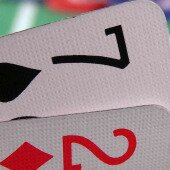
Texas Hold’em gives each player two private hole cards. The hand can then move through four betting rounds, with community cards added between rounds until the final board contains five cards.
- Preflop: Betting starts after players receive their two hole cards, before any community cards are dealt.
- Flop: Three community cards are dealt face up, followed by another round of betting.
- Turn: A fourth community card is added, followed by the third betting round.
- River: A fifth and final community card is dealt, followed by the last betting round.
Your final hand is the best five-card combination you can make from the seven cards available to you. You can use both hole cards, one of them, or neither if the community cards already make your strongest hand.
Why Texas Hold’em is a Good Starting Point for Beginners
Texas Hold’em is a practical first poker game because the basic structure is easy to follow once you understand the betting order. You only have two private cards to track, while the shared board provides you with clear information as the hand develops.
The format helps beginners learn how hand strength can change from one betting round to another. It also introduces important ideas such as position, bet sizing, and reading the shared board without adding too many extra rules at once.
Many of the skills you learn in Hold’em can carry over into other poker variants. Understanding hand rankings, betting patterns, and position gives you a useful foundation when you later move into games such as Omaha.
Omaha Poker
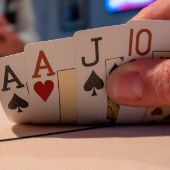
Omaha looks similar to Texas Hold’em because players use private hole cards together with a five-card community board. The biggest difference is that players usually receive four hole cards instead of two.
You must use exactly two of your hole cards and exactly three community cards to make your final five-card hand. That rule is important because you can’t simply use any combination of the cards available to you.
The extra hole cards create more possible hand combinations than you’ll usually see in Hold’em. Strong hands such as straights and flushes can appear more often, so beginners need to be careful about overvaluing weaker made hands.
Omaha vs. Omaha Hi-Lo
Standard Omaha awards the full pot to the player with the best high hand at showdown. Players must still use exactly two hole cards and three community cards to build that five-card hand.
Omaha Hi-Lo uses the same rule of exactly two hole cards and three community cards, but the pot can be split into two halves. One half goes to the best high hand, while the other goes to the best qualifying low hand.
To qualify for the low half, a hand usually needs five different cards ranked eight or lower. One player can win the entire pot by holding both the best high hand and the best low hand.
Seven-Card Stud
Seven-Card Stud doesn’t use community cards. Each player can receive up to seven cards during a hand, with the first two dealt face down, the next four dealt face up one at a time, and the final card dealt face down.
Betting takes place after the first three cards are dealt and again after each new card that follows. Because four cards can be visible, you can use those exposed cards to judge which hands your opponents may be building and which cards are less likely to appear.
At showdown, each remaining player chooses the best five-card hand from their seven cards. Standard poker hand rankings apply, and the strongest five-card hand wins the pot.
Other Poker Variants
Once you understand Hold’em, Omaha, and Seven-Card Stud, you may come across other variants that change how cards are dealt, ranked, or exchanged. These games can feel familiar at first, but even one rule change can affect which hands are strong and how you should play them.
- Stud 8-or-Better: Splits the pot between the best high hand and the best qualifying low hand when a low hand is available.
- Five-Card Draw: Gives players a chance to replace cards from their original hand before the final betting round.
- Lowball Poker: Reverses normal hand values so lower-ranked hands become stronger than traditional high hands.
- Short Deck: Removes cards ranked two through five, which changes hand frequencies and can affect the usual ranking order.
- Razz: Uses a stud format where the lowest hand wins instead of the highest.
- Pineapple: Starts each player with three hole cards, but one must be discarded before the hand continues.
- Chinese Poker: Gives players a larger group of cards to arrange into separate hands instead of using standard betting streets.
Poker Table Positions & Why Position Matters
Position describes where you sit in relation to the dealer button and, more importantly, when you act during a betting round. A later position can be valuable because more players have already revealed something about their intentions before you have to make a decision.
Since the dealer button moves clockwise after every hand, nobody stays in the same position for long. Learning how those positions change helps you understand why the same starting cards may be played differently depending on where you’re seated.
Early, Middle & Late Position
Position affects how much information you have before making a decision. The table below shows how early, middle, and late position change when you act and what you know about the rest of the table.
| Position | Order of Action | Strategic Impact |
|---|---|---|
| Early Position | Among the first players to act | Most players still have a decision to make, so you have less information about what the table may do. |
| Middle Position | After early position but before late position | You’ve seen some opponents act and have fewer players left to make decisions behind you. |
| Late Position | Among the last players to act | You can see how most opponents respond before your turn, giving you more context for your decision. |
Why Acting Later Gives You More Information
Poker rarely gives you complete information, so every action you observe matters. A player who checks may be showing weakness, while a bet or raise can suggest greater confidence in the hand.
None of those actions tells you exactly what cards someone holds. However, acting later lets you combine those clues with the cards on the table before risking more chips, which can make difficult decisions easier.
The Button, Small Blind & Big Blind
The button, small blind, and big blind help determine both the forced bets and the order of play. Their positions move clockwise after each hand.
- Button: Marks the dealer position and usually acts last after the flop.
- Small Blind: Sits directly to the left of the button and posts the smaller forced bet.
- Big Blind: Sits to the left of the small blind and posts the larger forced bet.
How a Poker Hand Plays Out Step by Step
Texas Hold’em provides the clearest example of how a community-card poker hand develops. A complete hand can contain four betting rounds, although many hands end sooner because every player except one folds.

- Preflop: Each player receives two private hole cards. The first betting round begins before any community cards appear.
- Flop: Three community cards are dealt face up. Another betting round follows.
- Turn: A fourth community card appears before the third betting round.
- River: The fifth and final community card is dealt. Players still in the hand complete the last betting round before a possible showdown.
A hand can end during any of these stages. Once all other players fold, the remaining player wins the pot without needing to reveal a winning combination.

Every bet and call adds chips to the pot, while raises increase what others must commit to stay in the hand. The pot goes to the last remaining player or the best hand at showdown. Side pots form when an all-in player has fewer chips than opponents who continue betting.
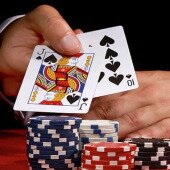
A showdown occurs when at least two players remain after the final betting round. Each player reveals their cards, and the best five-card hand wins the pot. In Texas Hold’em, players choose their best five cards from the seven available cards. Identical hands split the pot rather than using suits as a tiebreaker.
Basic Poker Strategy for Beginners
Good poker strategy starts with avoiding unnecessary risks rather than trying to win every pot. Beginners can make better decisions by choosing stronger starting spots, paying attention to when they act, and recognizing when a hand is no longer worth pursuing.
Some hands allow you more room to make mistakes than others. A disciplined approach helps preserve your stack and gives you more chances to play when the situation is actually favorable.
Play Fewer Starting Hands
Playing too many starting hands puts you in difficult situations with cards that have limited potential. Stronger starting hands give you a better foundation and reduce the number of marginal decisions you have to make later.
The goal isn’t to wait only for premium cards. Instead, avoid entering pots simply because you’ve been dealt something playable, especially when the hand is weak, disconnected, or likely to be dominated by stronger cards.
Pay Attention to Position
Position changes how much information you have before acting. Early position forces you to make decisions while most of the table is still waiting, while later position lets you see more folds, calls, and raises first.
That makes late position more forgiving for borderline hands. You can adjust your decision based on what has already happened rather than guessing what several players behind you might do.
Know When to Fold
Folding is part of protecting your stack, not a sign that you’ve played the hand badly. You may start with reasonable cards and still reach a point where continuing no longer makes sense.
Common reasons to fold include:
- The game develops in a way that leaves your hand with little room to improve.
- An opponent’s betting suggests you may already be behind.
- Calling would require risking too much compared with what you could realistically win.
How to Practice Poker Online for Free
Start with a play-money table, which is an online poker table that uses virtual chips with no cash value. It lets you learn the rules, betting order, and table controls without risking real money.
Use the first few hands to focus on when you can check, call, raise, or fold rather than trying to win as many chips as possible. Once the table flow feels familiar, try longer sessions or a different poker format while keeping free play focused on practice.
Online Poker vs. Live Poker
Online poker and live poker follow the same core rules, but the overall experience can feel very different. Online tables at poker sites automate dealing, pot tracking, betting controls, and payouts, which speeds up the game and reduces the amount of table management players have to handle themselves.
Live poker moves more slowly and puts more responsibility on the player to follow the action, manage chips, and interact with the dealer. For beginners, online poker can be useful for seeing more hands quickly, while live poker gives you more time to process each decision and understand how a physical table operates.
| Feature | Online Poker | Live Poker |
|---|---|---|
| Game Speed | Faster because software handles dealing, bets, and payouts. You’ll see more hands but have less time to decide. | Slower because the dealer handles cards and chips manually, giving you more time to follow the action. |
| Table Interaction | Relies more on betting patterns, timing, and previous actions than face-to-face behavior. | Includes direct interaction, table talk, and visible reactions from other players. |
| Software & Betting Controls | The interface tracks the pot, shows available actions, and manages betting order. | You follow the dealer, handle chips, and make bets manually. |
You can learn more by visiting our guide to how online poker works.
Poker Formats & Ways to Play
Poker games can differ in two ways: the rules of the variant and the format used to play it. Texas Hold’em, Omaha, and Stud change how cards are dealt or combined, while tournaments and cash games change how players buy in, win money, and leave the table.
That distinction matters because many poker variants can be played in several formats. A Texas Hold’em cash game, for example, follows the same hand rules as a Hold’em tournament, but the blinds, chip values, and way winnings are handled can be very different.
Poker Tournaments
Poker tournaments give every player a starting stack of tournament chips in exchange for a set buy-in. Blinds increase over time, and players are eliminated when they lose all their chips unless re-entry rules allow them back into the event.
Prize money is distributed according to finishing position rather than the value of the chips still in front of you.
Sit-and-Go Tournaments
Sit-and-go tournaments (often abbreviated as SNGs) begin once the required number of players has registered instead of starting at a fixed time. They usually involve fewer players than large scheduled tournaments, which can make them quicker to complete.
Blinds still increase as the event progresses, so the value of your stack changes throughout the game.
Freeroll Tournaments
Freerolls don’t require a standard cash buy-in, although some may have eligibility requirements. They can still award real prizes, which makes them useful for gaining tournament experience without putting the same amount of money at risk.
The play can be less predictable than in paid tournaments because entrants have little or nothing invested.
Cash Games
Cash game chips have a direct monetary value, so a $1 chip generally represents $1 at the table. Blinds normally stay at the same level, and players can usually join or leave between hands rather than waiting for a tournament to end.
You can buy more chips when table rules allow it, which makes bankroll management different from tournament play.
Common Poker Formats & Table Variations
The same poker game can appear in several formats that change the pace, number of opponents, or way prizes are awarded.
- Turbo tournaments use shorter blind levels to speed up play.
- Bounty tournaments award prizes for eliminating other players.
- Satellite tournaments offer entry into a larger event instead of a standard cash prize.
- Fast-fold poker moves you to a new table or hand immediately after you fold.
- Heads-up poker is played between two players rather than a full table.
- Full-ring and short-handed tables change how many players are seated at once.
Poker Etiquette
Poker etiquette helps keep the game clear and fair, especially when several players are making decisions in quick succession. Most beginner mistakes aren’t serious, but they can confuse the action or reveal information that other players weren’t supposed to have yet.
The easiest way to avoid problems is to watch the action closely, wait for your turn, and make each decision obvious to the dealer and the rest of the table.
Wait Until It's Your Turn to Act
Acting before the action reaches you can affect how other players respond. Wait until the previous player has finished before checking, betting, calling, raising, or folding, even when your decision already feels obvious.
Make Your Betting Intentions Clear
Unclear bets can create disputes over whether you meant to call or raise. In live poker, say your intended action when necessary and move chips forward in one clear motion.
Common mistakes include:
- Tossing in chips without stating whether you’re calling or raising
- Adding chips in several separate movements
- Moving chips forward and then trying to take them back
Avoiding Playing Slowly
Poker gives you time to think, but routine decisions shouldn’t hold up the table. Follow the action while other players are deciding so you’re ready when your turn arrives.
Difficult spots may justify extra time. Simple folds, checks, and obvious calls usually don’t.
Responsible Gambling When Playing Poker
Poker combines skill with chance, which can make it easy to overestimate how much control you have over short-term results. Even strong decisions can lose, and long sessions or repeated buy-ins can turn a manageable loss into a larger one. Problem gambling can cause personal, financial, and professional harm, so it helps to set clear limits before you start playing.
Decide how much money and time you’re willing to spend before joining a table or tournament. Treat that amount as entertainment money rather than money you expect to win back, and don’t increase your stakes just to recover previous losses.
There are national resources available to help you stay healthy while playing poker.
Responsible Gambling Resources
Poker FAQs
Both, though skill can win out over time. Luck decides individual hands, but consistent winners rely on math, position, reading opponents, and disciplined decisions.
Yes, but it is hard. Because you compete against other players rather than the house, skilled play can profit long term. Most people lose, so treat any winnings as a bonus, not income.
Less than you think. Low-stakes online games and small home games start for a few dollars. Set aside only money you can afford to lose, and keep it separate from essential expenses.
You play against other players, not the house, so there is no fixed house edge. The venue takes a small cut called rake. Skill and psychology directly affect whether you win over time.
A kicker is a side card that breaks ties when players hold the same main hand. For example, if two players both have a pair of kings, the highest kicker wins the pot.
Cash games are usually better for learning. You can buy in for a set amount, leave anytime, and play consistent stakes. Tournaments offer cheap entries and big upside, but they take longer and swing harder.
Sit Down at a Table & Start Playing Poker
Poker becomes easier to understand once you see how the cards, betting, and table position work together. Knowing the basic rules gives you a clearer sense of how hands develop, why different decisions matter, and how the same situation can play out differently depending on where you sit or how much is at stake.
Beginners can use that foundation to compare common poker formats, follow the action more confidently, and avoid basic table mistakes. A complete approach also means understanding poker etiquette and recognizing the importance of setting limits on the time and money you’re willing to spend before you play.


