 90%
90% 75%
75% USA
USA Canada
 Australia
 UK
UKPast Canadian Performers in Eurovision History & 2027 Predictions


Eurovision has always felt like a party that Canada was watching from outside the window, cheering along in French and English without ever getting an invite to compete. That changed on Canada Day, when the European Broadcasting Union (EBU) and CBC/Radio-Canada confirmed Canada’s entry in the 2027 Eurovision Song Contest, competing in Bulgaria as the first new country added to the lineup since Australia in 2015. It’s a genuinely historic invitation for a nation that has spent decades cheering from the sidelines.
But here’s the twist longtime Eurovision fans already know: Canadians have been showing up on that stage for almost 40 years, just wearing another country’s flag. From a teenage Céline Dion belting out a winning ballad for Switzerland to a Montreal singer carrying France’s hopes in 2023, Canadian voices have quietly shaped Eurovision history long before the country was allowed to compete.
Before we get into who might represent the Great White North in 2027, it’s worth looking back at how Canadians found their way onto Europe’s biggest stage in the first place.
How Have Canadians Participated in Past Competitions?
Eurovision eligibility has never actually been about geography. It’s tied to membership in the EBU, the organization that runs the contest, which is why non-European countries like Australia, Israel, and Morocco have all competed at various points. Canada’s national broadcaster, CBC/Radio-Canada, for decades only held associate membership status, a tier that let the network observe and even send performers to smaller Eurovision family events. Participation in the Eurovision Song Contest requires full EBU membership, which CBC didn’t secure until June 2026.
However, for years that distinction created a loophole: individual Canadian artists were free to perform if selected by participating countries. Over the last four decades, several Canadian singers auditioned for and won spots on other nations’ Eurovision teams, even while Canada itself wasn’t permitted to compete.

Céline Dion — Switzerland — 1988
No conversation about Canadians in Eurovision starts anywhere else. In 1988, a 20-year-old Céline Dion took the stage in Dublin representing Switzerland with “Ne partez pas sans moi,” a soaring pop ballad that edged out the United Kingdom by a single point to win the entire contest.
René Angélil, Dion’s manager (and future husband) entered the Quebecoise singer, at this point already well known in French-Canadian music circles, into the Swiss national final. Her victory is widely credited with helping launch her into global superstardom, and it remains the moment most people point to when they talk about Canada’s “unofficial” Eurovision legacy.

Lara Fabian — Luxembourg — 1988
Sharing that same stage in 1988 was Lara Fabian, who placed fourth representing Luxembourg with “Croire.” Fabian wasn’t yet Canadian at the time of her performance, but she later moved to Quebec and became a Canadian citizen in 1995, making her a retroactive addition to Canada’s Eurovision family tree.
Fabian’s strong, theatrical vocal style became a hallmark of her career. She has since gone on to become one of the best-selling Belgian-Canadian artists of all-time.

Natasha St-Pier — France — 2001
Born in Bathurst, New Brunswick of Acadian heritage, Natasha St-Pier represented France in 2001 with “Je n’ai que mon âme,” finishing in fourth place. Passionate Eurovision fans still consider the ballad one of the more beloved entries of its era.
St-Pier used the momentum to build a lasting francophone music career across Europe, releasing multiple albums and touring extensively in France long after her Eurovision run ended.

Rykka — Switzerland — 2016
Vancouver-born Rykka represented Switzerland in 2016 with “The Last of Our Kind,” drawing on her mostly Dutch and partial Swiss ancestry to qualify. The result was rougher than her predecessors: Rykka finished last in her semifinal with just 28 points. Still, she remained active in music afterward, performing primarily around Canada and building a devoted fan base outside the Eurovision spotlight.
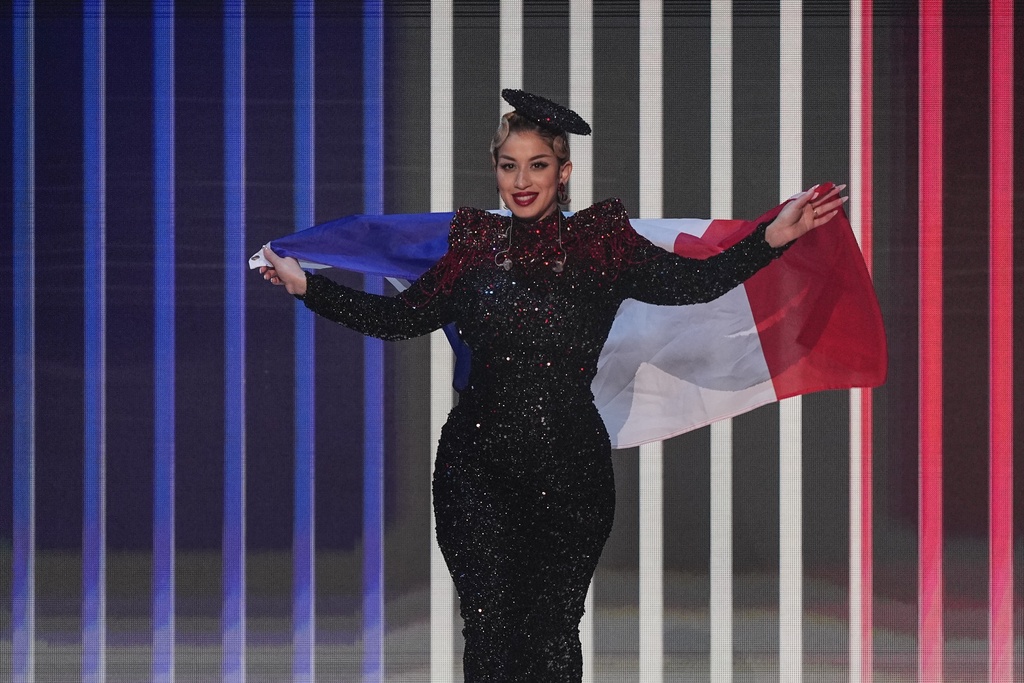
La Zarra — France — 2023
The most recent Canadian to take the Eurovision stage is Montreal-born Fatima Zahra Hafdi, known professionally as La Zarra. She represented France in 2023 with “Évidemment,” placing 16th overall. La Zarra had already built momentum in French pop circles through prior singles, while her Eurovision appearance introduced her to an even wider European audience.
Predictions for the Canadian Performer in 2027
Eurovision has a type, even if it’s a wildly varied one. Winning and standout entries tend to fall into a few lanes: big, theatrical pop ballads built for a key change (think Céline in 1988), high-energy dance-pop with a hook that translates across language barriers, or something delightfully strange that becomes a viral meme. Whoever CBC/Radio-Canada selects will need to fit somewhere on that spectrum.
Eurovision odds have become a real draw on platforms like Polymarket and Kalshi, where bettors can also trade on outcomes like the host city and which countries will field entries. As of now, there isn’t a dedicated market pricing out specific candidates to represent Canada, but CBC/Radio-Canada has said it will announce its selection process later in 2026.
Broader Eurovision 2027 markets, including which country wins and where the contest is hosted, are already live and worth watching for anyone curious how oddsmakers view Canada’s debut chances.
In the meantime, speculation is running wild about who might get the call for Canada. A few names that keep coming up:
- bbno$ — The viral Vancouver rapper behind “Edamame” comes up constantly in fan speculation, and his high-energy, meme-friendly style fits the chaotic nature of Eurovision.
- Alessia Cara — A Grammy winner currently between major album cycles, making her plausible without being untouchable.
- Charlotte Cardin — A bilingual, Montreal-based artist with multiple Juno wins; her French/English crossover appeal lines up with Canada’s history of sending Francophone acts abroad.
- The Beaches — A Toronto rock band with real momentum after “Blame Brett.” They’re also an excellent live band with a strong visual identity, which tends to play well on the Eurovision stage.
- Jessie Reyez — A Toronto R&B/pop artist with a distinctive voice and enough international recognition to be credible without being unrealistic.
- Down With Webster — The Toronto rap-rock collective has built-in fan buzz (jokes about Prime Minister Mark Carney secretly angling to get them to Eurovision have circulated online), and their genre-blending, high-energy live show could translate well to the format.
Nothing is confirmed, and CBC/Radio-Canada has given no indication of leaning toward a big name over an emerging artist. But with Canada’s first-ever entry on the line and a full year to build anticipation, expect the guessing game to only get louder between now and Bulgaria.


