 90%
90% 75%
75% USA
USA Canada
 Australia
 UK
UKSEC to Require Mandatory Gambling Education for Athletes

Key Highlights
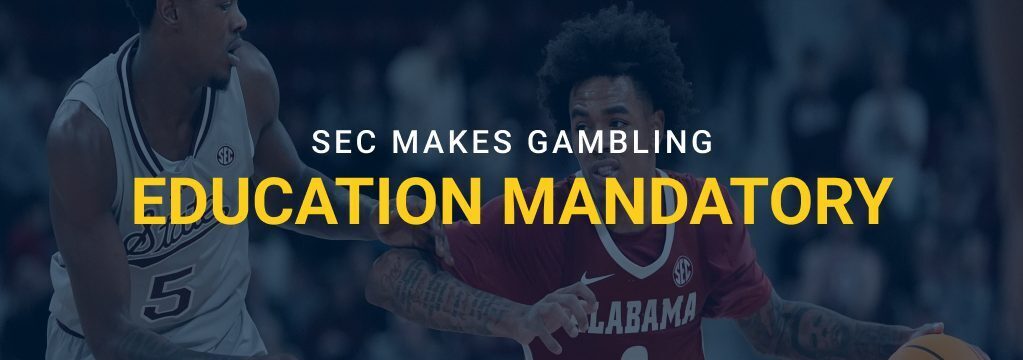
- The SEC will require all student-athletes to complete gambling education before competing, beginning this season.
- Athletes must watch a conference-designed sports betting awareness video.
- The policy comes as gambling concerns continue rising across college athletics.
Starting this season, the Southeastern Conference (SEC) will require all student-athletes to complete mandatory sports gambling education.
As part of the new policy, every SEC athlete will be required to watch a gambling education video before participating in their team’s regular season competition.
SEC Expands Integrity & Gambling Prevention Measures
Conference officials announced the initiative during the SEC spring meetings in Destin, Florida, where gambling-related concerns were a major topic amid the continued expansion of regulated sports betting.
The educational program will address sports betting risks, prediction markets, integrity concerns, and NCAA gambling rules. The conference has also placed sports betting awareness posters inside locker rooms and launched an anonymous hotline designed to report suspicious betting activity connected to college sports.
The rapid growth of US sports betting and prediction markets made the initiative a major priority for the conference, according to SEC commissioner Greg Sankey. There have been several recent gambling investigations involving both college and professional sports, highlighting the need for greater athlete education and integrity monitoring across college campuses.
Around $12 billion was wagered on SEC teams through sports betting sites and federally supervised prediction markets during the 2025-26 season.
NCAA Continues Monitoring Sports Betting Concerns
Sports betting enforcement has become a growing issue throughout college athletics. NCAA officials have repeatedly warned about the risks connected to insider information, athlete harassment on social media, and the increasing normalization of gambling in the US among young people.
The NCAA monitors more than 22,000 competitions annually through one of the world’s largest integrity monitoring systems. The organization has also increased education and prevention efforts through its “Draw the Line” campaign.
Current NCAA rules prohibit athletes from betting on college sports or sharing insider information tied to competitions, injuries, or team matters. Violations can result in suspensions, loss of eligibility, scholarship penalties, and other disciplinary action depending on the severity of the offense.
SEC Maintains Strict Position On Athlete Gambling
The SEC’s tougher educational requirements arrive as the NCAA debates whether student-athletes should eventually be allowed to wager on professional sports. Some administrators around college athletics have supported relaxing those restrictions, arguing that educational programs may be more effective than strict punishments.
Sankey has publicly opposed loosening gambling restrictions for athletes, arguing that legal wagering on professional leagues could normalize betting behavior and weaken integrity protections within college athletics.


