 90%
 75%
 USA
 Canada
 Australia
 UK
AI Casino Games: Who’s Checking the Math?

Almost anyone can now build a casino game using AI tools, and one crypto casino has started letting players do exactly that. Creators can design their own games, get them published, and earn a share of what other players lose. It opens the door to a whole new group of game developers, but it also raises an important question: who’s checking that these games actually pay what they promise?
There’s already reason to be concerned. An independent audit in October found that Towers, one of my favorite crypto casino games, had been underpaying players since at least 2023. A $100 bet that should have returned around $1,520 after clearing four rows paid just $1,303, despite the game’s advertised 5% house edge. The game still passed its provably fair checks. Here’s what that means for players who are building casino games now, and why checking the math matters more than ever.
How Did a Provably Fair Game Underpay Players for Years?
One of the biggest selling points of crypto casino originals is their transparency. For once, players don’t have to take the casino’s word for it. They can verify the outcome of every round themselves. But there’s a catch: provably fair checks confirm the results, not whether the game pays what it promises.
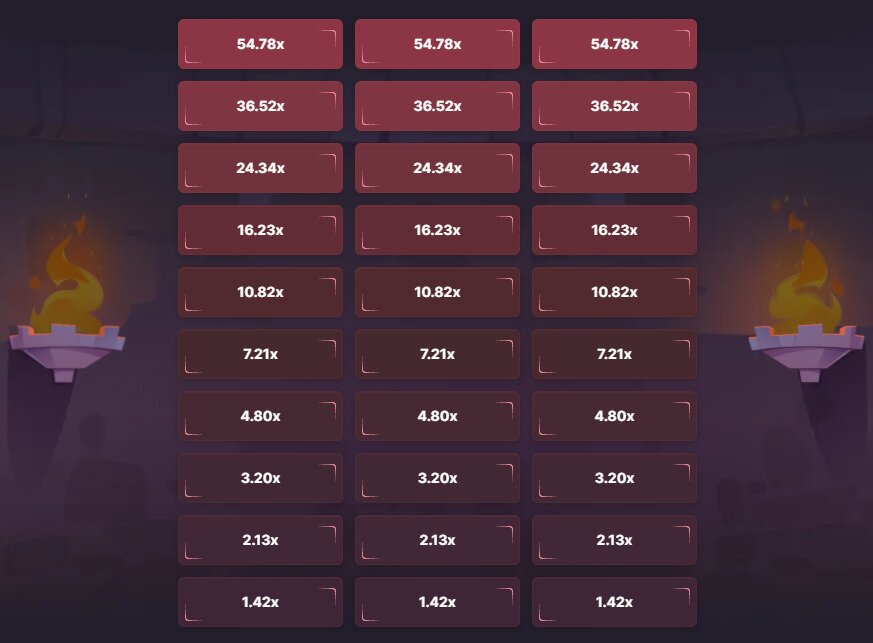
Take Towers at 500 Casino, for example. Its provably fair system correctly verified where the bombs appeared on each board, but an independent audit by provablyfair.org found a problem with the payouts. The game applied its 5% house edge on every row instead of once per game. By the 10th row, the actual house edge climbed to over 40%.
You might wonder whether the game had been independently tested. Well, 500 Casino had two certificates from iTech Labs dating back to 2024. However, these only covered the random number generator (RNG), not the payout calculations that determine how much players win.
And this wasn’t an isolated case. A similar audit found that Gamdom’s crash game advertised a 99% RTP, while its published formula returned 98% at a 2x target and around 97% at higher targets. The auditor estimated that the discrepancy cost players an extra $1.58 million in 2026.
Neither audit accused the casinos of deliberately underpaying players, and both operators have since corrected their games. 500 Casino is also repaying about $1.74 million to more than 35,000 players.
What’s concerning is that both were in-house games, developed by the casinos themselves. If payout errors can go undetected for years in these titles, what happens when casinos start accepting games built by outside creators using AI?
A New Way to Build Casino Games Raises Questions About Fairness
On November 3, crypto casino Housebets launched House Studio, a platform that lets players create their own casino games using AI tools like Claude. Creators can start with around a dozen templates, including crash, Plinko, dice, and slots. Each submission goes through an AI review, followed by checks from a Housebets employee within about 24 hours.
Housebets handles the random outcomes, not the creators. A couple of games are already live, and I managed to try one called Octo Feast, which was fun to play. Its information section was surprisingly detailed, listing a 97.77% RTP across all modes, how often each mode pays, and the maximum possible winnings. The casino credits NUNCHAKU as the creator, although I couldn’t find any details about independent lab testing.

Here’s where things get interesting. House Studio pays creators 10% of what the casino keeps after paying winners on slots and 5% on in-house-style games. Creators can also set their own RTP between 90% and 99%. At 99% RTP, a slot creator could potentially earn an average of 10 cents for every $100 wagered. Lower that to 90%, and their potential earnings jump to $1. That’s 10 times as much for setting a lower RTP.
If other casinos adopt this approach, more people could start making games rather than just playing them. But it also raises questions about how these titles will be tested, especially if the number of submissions grows.
After all, checking a handful of games developed in-house is one thing. Reviewing hundreds of titles submitted by outside creators could be much harder, particularly when new games need to be released quickly.
There’s also the question of regulatory oversight. RNG certification is an important safeguard, but as the Towers case showed, it doesn’t necessarily mean the payout calculations are correct. If AI-assisted game development takes off, who’s going to check that the advertised RTPs match what players actually receive?
How To Check a Game Before You Bet
Before playing any casino game, it’s worth finding out as much as you can about it. Start by checking the RTP, reviewing the pay table, and reading the information available under the little “i” icon. These details should tell you how the game works, what it pays, and what your chances of winning look like.
You can take things a step further by checking the math on a small win. For example, if a game advertises a 5% house edge, its payouts should reflect roughly 95% of the fair odds. A simple calculation could help you spot discrepancies between what a game promises and what it actually pays.
It’s also worth looking into who developed the game. Check whether it comes from an established studio or was built in-house by the casino. Then see what other players have said about the developer and whether its games have undergone independent testing.
Choosing trusted online casinos with good reputations is another sensible precaution. Most importantly, remember that provably fair doesn’t automatically mean fair payouts. It can confirm that a dice roll or another game outcome wasn’t changed after you placed your bet, but it doesn’t verify that the payout matches the advertised odds. Someone still needs to check that math, and as we’ve seen, those checks don’t always catch everything.


