 90%
90% 75%
75% USA
USA Canada
 Australia
 UK
UKRichest NFL Players of All Time (And How They Built Their Fortunes)


NFL contracts have exploded over the last two decades, with the richest NFL players worth millions if not billions of dollars. That said, the richest players of all time didn’t necessarily make their money from football alone. In fact, when you look closely, signing bonuses and game checks are only part of the equation. The rest is all tied to business ownership, long-term investments, and brand-building.
This list ranks players based on estimated net worth, not career earnings. That distinction matters. A player might earn $300 million in contracts but end up with far less depending on taxes, spending, and investment decisions.
Subscribe now and get instant access to:
- A sports bonus worth up to $1,250
- Free weekly picks and betting tips
- Cash back on your wagers
Plus, up to $10,000 in bonuses and 200 free spins to use on blackjack, slots, and your other favorite casino games.
Richest NFL Players of All Time (Ranked)
The best athletes not only excel on the field but also make strategic financial moves. Here are ten athletes who’ve turned short NFL careers into long-term wealth.
1. Jerry Richardson — $2 Billion
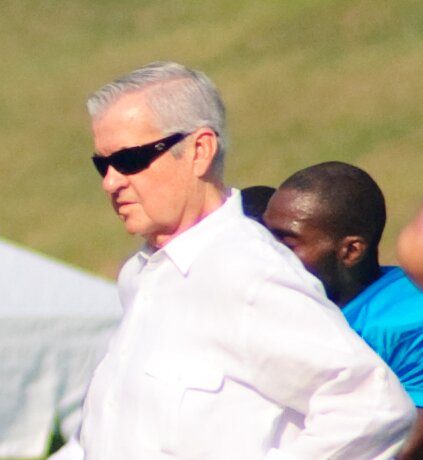
Jerry Richardson’s presence at the top of this list proves that football success doesn’t always correlate with financial success. Richardson played just two seasons in the NFL, recording modest stats as a wide receiver for the Baltimore Colts. He also scored a touchdown in the 1959 NFL Championship Game.
What sets him apart is what came next. Richardson built a fast-food empire through Hardee’s franchises. Said empire eventually scaled into one of the largest operators in the country. His most significant financial milestone came in 2018, when he sold the Carolina Panthers for $2.275 billion.
2. Roger Staubach — $600 Million
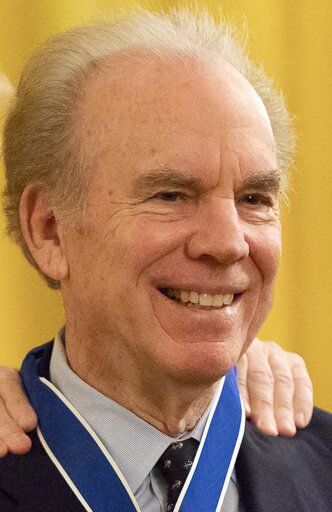
Roger Staubach is often cited as one of the smartest players, both on and off the field. During his NFL career as QB of the Dallas Cowboys, he led the team to two Super Bowl victories and earned Super Bowl VI MVP honors.
Financially, his true wealth came from real estate. While still playing, Staubach launched a commercial real estate business that eventually grew into a national firm. In 2008, he sold The Staubach Company for approximately $613 million.
3. Tom Brady — $300 Million

Tom Brady’s quarterback résumé is unmatched: seven Super Bowl titles and five Super Bowl MVPs. Over a 23-year career, Brady earned roughly $332 million in salary, with peak earnings during his Tampa Bay years.
However, his long-term financial strategy focused on building a brand through TB12, endorsements, and media ventures. Brady also signed a 10-year, $375 million deal to be Fox’s lead NFL analyst. His approach reflects a calculated trade-off between salary and long-term wealth building.
Tom Brady is also a part owner in Birminham City FC, a Championship League football team in the English Football League system. He joined in 2023 as a minority owner, and serves as the chairman of the club’s advisory board.
4. Peyton Manning — $250 Million
Peyton Manning combined elite QB performance with unmatched marketability. His performance as arguably the greatest quarterback of all time is backed with a resume of five-time MVP and two-time Super Bowl championships, helping Manning earn an approximate $248 million in salary.
His wealth expanded through endorsements and business ventures. That includes franchise ownership and media production. He continues to grow his income after retirement through multiple ventures, including his production company, Omaha Productions.
5. John Madden — $200 Million

John Madden, one of the most recognizable figures in the sport, had his playing career cut short due to a knee injury in his rookie year in 1959. Madden’s wealth came from coaching, broadcasting, and especially the Madden NFL video game franchise. At its peak, the former o-lineman earned millions annually in royalties.
Madden reportedly earned $8 million per year during his prime as a broadcaster. In 2005, he signed a NIL deal with EA Sports valued at an estimated $150 million. His career shows how media and licensing can surpass traditional playing income.
6. Steve Young — $200 Million

Steve Young started his pro career in the USFL, signing a 40-year, $40 million deal with the LA Express. After the USFL folded, he began his NFL career with the Tampa Bay Buccaneers in 1985, before joining the San Francisco 49ers in 1987. The dual-threat QB won two rings backing up Jo Montana, before leading the 49ers to their fifth Lombardi in Super Bowl 29.
Young transitioned from NFL success into private equity, becoming a founding member of HGGC. Despite his $40 million career, his post-football ventures significantly increased his net worth.
7. Aaron Rodgers — $200 Million
Aaron Rodgers represents modern NFL earnings. With over $300 million in career earnings and major endorsement deals, the QB remains one of the richest active players.
Rodgers is still playing, but his days of signing record-setting contracts are behind him. His biggest endorsements were with State Farm and Pizza Hut. Off the field, Rodgers is a minority stakeholder in the Milwaukee Bucks. He also co-founded RX3 Growth Partners, an investment firm with stakes in brands like Manscaped and Therabody.
8. Drew Brees — $160 Million

Drew Brees earned nearly $269 million as an NFL quarterback. Moreover, he’s built long-term financial stability by investing heavily in real estate and franchises.
While playing, Brees had sponsorship deals with major name brands, including Pepsi, Wrangler, and Nike. Since retiring after the 2021 season, Brees has turned his attention to the restaurant business. He owns multiple Jimmy John’s and Dunkin’ Donuts locations.
9. John Elway — $145 Million

John Elway spent his entire 16-year NFL career as the QB of the Denver Broncos, leading the team to two Super Bowl wins in five appearances. He earned approximately $45.5 million during his playing days. He also worked as an executive for the Broncos, including serving as the team’s GM, from 2011 to 2023.
Elway built wealth through post-retirement business ventures. The big one is his car dealership empire, which he sold for millions. He could be much higher on this list had he not turned down a 20% stake in the Broncos in 1998, which would be worth an estimated $1 billion today.
10. Brett Favre — $100 Million

Brett Favre’s career as an NFL quarterback included stints in Atlanta, Green Bay, New York, and Minnesota. The Hall of Famer earned over $140 million during his playing days, and he won a Super Bowl with the Packers.
Once one of the faces of the NFL, Favre had endorsement deals with Mastercard, Nike, and Wrangler, among others. However, a welfare fraud scandal and the lack of his post-retirement investments prevented Favre from being higher on our list of the richest NFL players ever.
How NFL Players Build Wealth
The modern salary cap has exploded due to lucrative TV deals, leading to bigger contracts for the best NFL players.
Nine-figure salaries loaded with guarantees are a great way to make money, but it is not the only way NFL players can build wealth. Stars, especially quarterbacks, who are the face of their respective franchises, can land major endorsement deals. Also, they can use their fame and wealth to start successful business ventures.
A common business venture for modern retirees is sports media. Working for a major network or starting their own podcast is a great way for former players to turn their fame into quick cash.
Former players also have more free time after retirement. The work ethic that made them successful in the NFL helps former stars become wealthy businessmen.
It is also important to understand the difference between earnings and net worth. Regular income earned from salaries and investment dividends is nice, but owning successful businesses and other assets, such as real estate, is the key to building up your net worth.
Richest Active NFL Player
Calculating a current NFL player’s net worth can be tricky. Modern contracts have exploded in value. However, they also carry incentives and unguaranteed payments that can make them appear larger than they actually are.
To the surprise of no one, the current wealthiest NFL players are all quarterbacks. Assuming he plays in 2026, the active player with the highest net worth is Aaron Rodgers at $200 million.
Most of Rodgers’ wealth came from the $394 million he earned throughout his NFL career. However, he has also been active with other investments and earns approximately $9 million from endorsement deals.
After Rodgers, the list of the richest active players includes:
- Kirk Cousins – $180 Million: A four-time Pro Bowler, Cousins prioritized signing fully guaranteed contracts over big money deals for most of his career. The $11.3 million guaranteed he is due this season will move him up to third on the all-time NFL career earnings list.
- Russell Wilson – $165 Million: Wilson won Super Bowl 48 as the Seahawks’ starting QB and has racked up over $315 million in career earnings. In addition to endorsement deals, Wilson owns 3BRAND, a clothing company that generates $100 million in annual sales.
- Matthew Stafford – $150 Million: The first overall pick in 2009, Stafford has earned over $408 million from his NFL contracts, making him the highest-paid NFL player of all time based on career earnings.
- Patrick Mahomes – $120 Million: The centerpiece of the modern Chiefs’ dynasty, Patrick Mahomes, signed a 10-year, $450-million deal in 2020. His endorsement deals, which include State Farm and Oakley, earn him $20-$30 million per year, and he owns stakes in local KC teams, such as the Royals and Sporting KC.
Rodgers has had longer to build wealth off the field, but other modern QBs are quickly catching up.
Modern QB contracts increase in value every year, giving today’s players a huge advantage over their predecessors. Modern TV deals have helped the league pay its players more with a seemingly ever-increasing salary cap.
For comparison, Dak Prescott, the highest-paid player in the NFL, earns $60 million per year in AAV on a $240 million contract. The salary cap for an NFL team in 2000 was only $63.2 million.
Contracts are also more complex, allowing for more guarantees, salary triggers, and incentives to help boost the salaries of the league’s best players.


