 75%
75% USA
USA Canada
 Australia
 UK
UK
 80%
80%  80%
80% - Downloadable app available for seamless mobile play.
- Wide table limits ($1–$5,000) cater to both casual players and high rollers.
- Transparent rewards program lets players convert points directly into cash at 100 = $1.
Expert Guide to Point Spread Betting

Disclosure: At GamblingSites.com, our mission is to connect you with the best gambling sites and informational resources available. If you click one of the links on our site, we may earn a commission payment at no extra charge to you.
What is point spread betting is a key question for beginners learning how sports wagering works. This form of wagering focuses on predicting the scoring margin, which makes it easier to understand than many other bet types.
With point spread betting explained clearly, new bettors can see how spreads balance mismatched teams and create competitive betting opportunities. Learning these basics provides a strong foundation for exploring more advanced sports betting strategies.
What Is Point Spread Betting?
Point spread betting assigns a margin that the favorite must exceed, and the underdog can stay within. This structure makes games more competitive from a betting perspective, even when one team is significantly stronger than the other.
Definition and Purpose of Point Spreads
A point spread is a handicap created by a sportsbook. The favorite receives a negative number (ie, -3) that signals how many points they must win by, while the underdog is given a positive number (ie, +3) showing how many points they can lose by and still result in a winning bet. The purpose is to balance betting interest and create a more even market.
Covering the Spread vs. Not Covering
The favorite covers the spread when they win by more than the assigned number. If they win by fewer points or lose outright, they do not cover. The underdog covers by winning outright or losing by fewer points than their spread. This dynamic shifts the focus from simply predicting the winner to forecasting how the game will play out.
Quick Example with Final Score Math
- Dallas Cowboys -4.5
- New York Giants +4.5
Imagine the Cowboys are -4.5 against the Giants at +4.5. If the Cowboys win 27 to 20, the margin is seven points, which is enough to clear the spread. If they win 21 to 17, they win the game but fail to cover because the gap is only four points. In that case, a Giants +4.5 bet would be the winning side.
How to Read and Interpret Point Spreads
Understanding how sportsbooks display spreads is essential for new bettors. Here’s a breakdown of how point spreads should be read and interpreted.
Point Spread Notation Explained
A quick breakdown helps clarify what each number means:
- A negative number indicates the favorite and the margin they must win by.
- A positive number indicates the underdog and how many points they can lose by and still cover.
- Decimal points such as 3.5 prevent ties and guarantee a win or loss.
- Larger spreads indicate a wider perceived gap between teams.
Understanding Half Points
A spread of 3.5 introduces a half point that removes the possibility of a tie between the spread and the final margin. With -3.5, the favorite must win by more than a field goal. With +3.5, the underdog gains a small cushion that covers many close games.
Pushes: What Happens with Whole Number Spreads?
If the spread is a whole number like -3 or +6 and the favorite wins by exactly that number, the bet results in a push. Sportsbooks refund the original stake to both sides. While pushes are less common with half-point spreads, they remain part of point spread betting whenever whole numbers appear.
How to Bet the Point Spread: Step-by-Step Guide
Placing a spread bet involves a straightforward process that becomes intuitive with practice. If you need a broader overview before placing your first wager, check out our sports betting introduction guide for the basics.
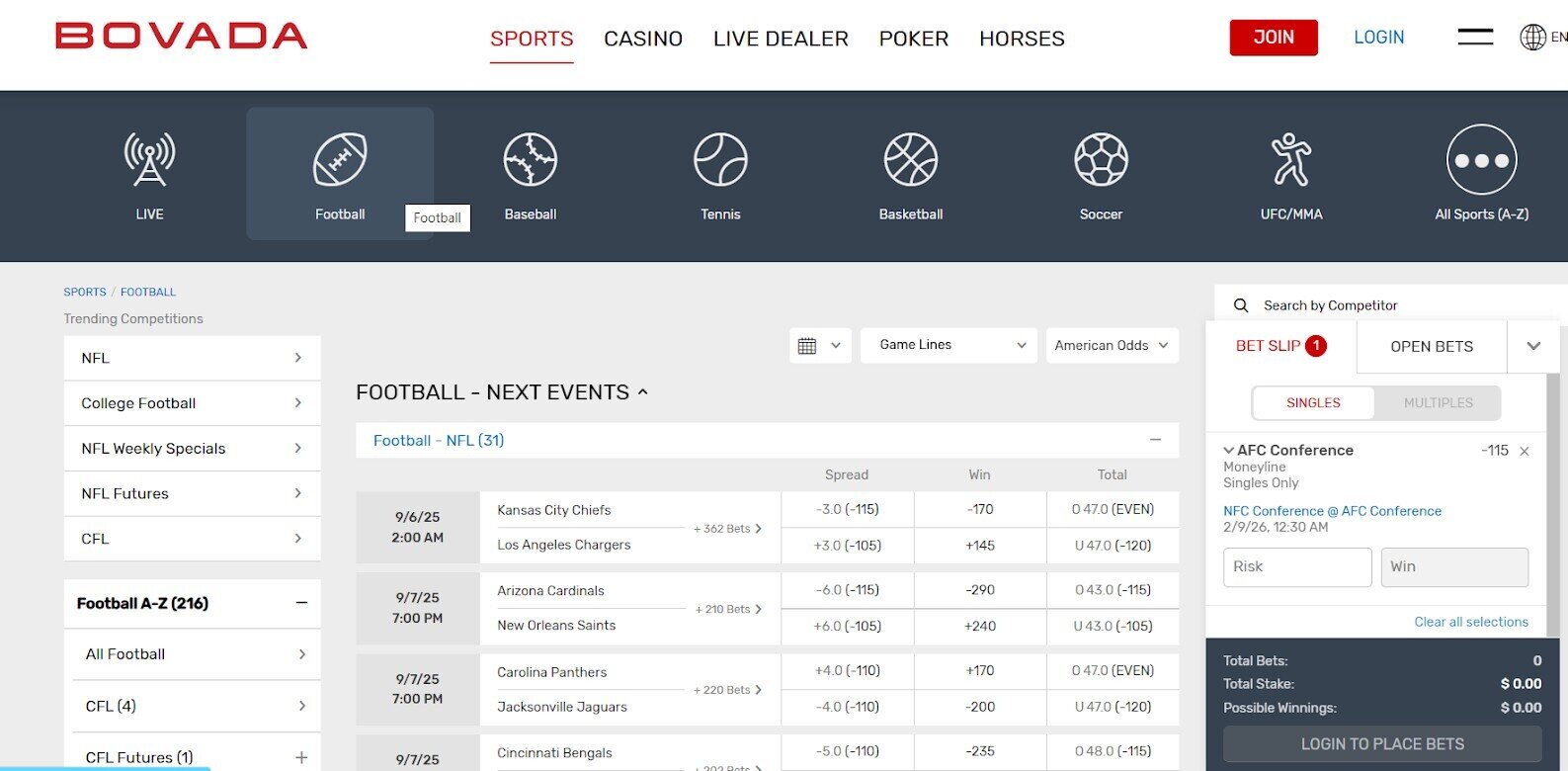
Online sportsbooks list each matchup along with the available betting lines. Look for the point spread next to the team names, which will show a positive or negative number representing the margin you are betting on.
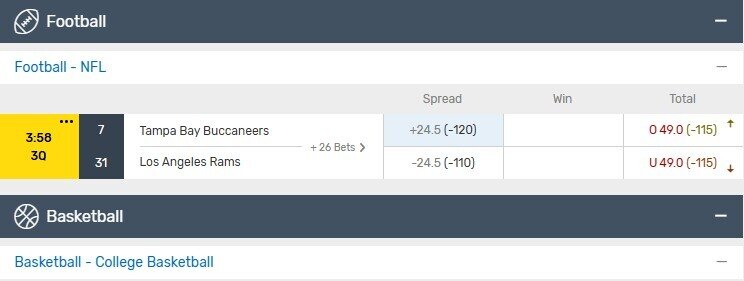
Choose whether you want to bet on the favorite or the underdog by clicking the spread number associated with that team. This selection tells the sportsbook which side of the spread you are backing.
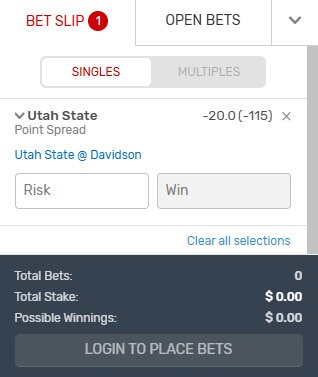
Once you click the spread, your bet slip will appear automatically. It shows the team you selected, the spread, and the corresponding odds so you can verify everything is correct before entering an amount.

Type in the stake you want to wager. The sportsbook will display your potential payout based on the odds, helping you understand what you can win if the bet is successful.

Before submitting, confirm the team, the point spread, the odds, and the amount you are wagering. A quick review prevents accidental selections or misunderstandings about how the bet works.
Point Spread Betting Examples
The following point spread examples should help clarify how spreads influence outcomes as well as show how sports can differ from one another.

NFL or NBA Point Spread Scenarios
In football, spreads often align with common scoring gaps. A team listed at -7 must win by more than a touchdown. If the Packers win 28 to 20, they cover the 7. If they win 24 to 20, they fail to cover. Basketball spreads can range widely due to faster scoring and more points in general. A -6.5 spread in the NBA typically requires steady performance across all four quarters.
Half-Point Spreads and Their Impact
Half-point spreads eliminate pushes and create definitive outcomes. A team listed at -3.5 must win by four or more. The presence of a hook often influences decisions, particularly in sports with predictable scoring increments.
Large Spreads and Underdog Wins
Significant spreads such as +14.5 highlight games where an underdog may not be expected to win but could still offer value by keeping the game close. Real-world factors like tempo, injuries, or defensive strengths can help an underdog stay competitive.
Point Spread Payouts and Point Spread Bet Calculator Guide
Understanding payouts provides clarity on how spread wagers return value. If you’re unsure how odds work in general, our full guide on understanding betting odds explains everything in more detail.
Using a Point Spread Bet Calculator
This table shows how a calculator displays payouts for common wagers at -110 odds:
| Stake | Odds | Profit | Total Return |
|---|---|---|---|
| $10 | -110 | $9.09 | $19.09 |
| $50 | -110 | $45.45 | $95.45 |
| $100 | -110 | $90.91 | $190.91 |
A calculator allows you to adjust stakes or odds and instantly view the updated payout without doing the math manually.
Manual Payout Calculation for Point Spread Bets
At standard -110 odds, wagering $100 yields a profit of $90.91 and a total return of $190.91. With a $10 stake, the profit is $9.09. Divide your wager by 1.10 to find your profit, then add the original stake for the total payout.
Understanding Juice (Vig) on Point Spreads
The vig is the fee a sportsbook collects. At -110, the break-even success rate is approximately 52.38 percent. This means bettors must win slightly more than half of their wagers over time to profit.
Odds Formulas for Implied Probability
Implied probability helps translate odds into practical percentages.
- For negative odds, divide the absolute value of the odds by that number plus 100.
- For positive odds, divide 100 by the odds plus 100.
Point Spread Betting vs. Moneyline Betting
Many beginners wonder when to choose a spread or a moneyline bet. The table below highlights the key distinctions.
Key Differences and When to Use Each
| Feature | Point Spread | Moneyline |
|---|---|---|
| What you predict | Margin of victory or defeat | Which team wins |
| Appeal for favorites | More affordable risk due to smaller required margin | Can be expensive when backing strong favorites |
| Appeal for underdogs | Offers cushion if team loses by a small margin | Higher payouts for outright wins |
| Best for | Games with clear skill gaps | Games expected to be closely contested |
| When beginners may choose it | When unsure if a favorite will win comfortably | When confident an underdog could win outright |
Tips and Strategies for Point Spread Betting
Simple habits can help beginners improve decision-making with spreads. Here are a few key point spread betting tips and strategies to employ.
Understanding Key Numbers (NFL and NBA)
NFL scoring patterns make certain numbers more important than others. Margins of three and seven occur frequently, which affects how spreads interact with actual game results. In the NBA, scoring is more continuous, so spreads vary more widely. Recognizing team tendencies can guide your choices.
Line Shopping for the Best Value
Sportsbooks may list slightly different spreads or odds for the same game. Comparing these numbers can improve your long-term results. Even small differences such as betting a team at -105 instead of -110 reduce the overall cost of wagering.
Bankroll Management and Risk Control
Responsible betting starts with consistent stake sizes and a defined budget. New bettors should avoid making emotional wagers and stay disciplined regardless of recent outcomes.
Why Do Point Spreads Change?
Spreads can shift due to injuries, weather updates, or betting volume. Understanding these changes helps identify favorable opportunities.
What's the Line? Understanding Opening and Closing Lines
Sportsbooks release opening lines based on early projections. As new information emerges, these lines adjust. The closing line reflects the final number before a game begins. Observing this movement can offer insight into how the betting market values each team.
Point Spread Betting FAQ
Can You Parlay Point Spread Bets?
Yes. Parlays combining multiple spread bets offer higher potential payouts but also carry higher risk because all selections must win.
What Happens If a Spread Bet Is Canceled or Voided?
If a game is canceled or postponed according to sportsbook rules, your stake is refunded. In parlays, a voided leg is removed while the remaining legs continue.
Is Point Spread Betting Legal in My State?
Sports betting laws differ by state. Some states allow online wagering, while others offer only in-person betting. Checking local regulations ensures you participate legally.
What Point Spread Betting Is and How It Works
Point spread betting allows bettors to focus on predicting how competitive a game will be rather than simply choosing the winner.
By learning how spreads work, understanding notation, and reviewing payout structures, beginners can approach spread betting with more clarity and confidence. Over time, recognizing line movement, comparing odds, and practicing responsible bankroll management can help improve long-term results.