Human Toe Cocktails and Cod Kisses: Canada’s Most Unique Traditions
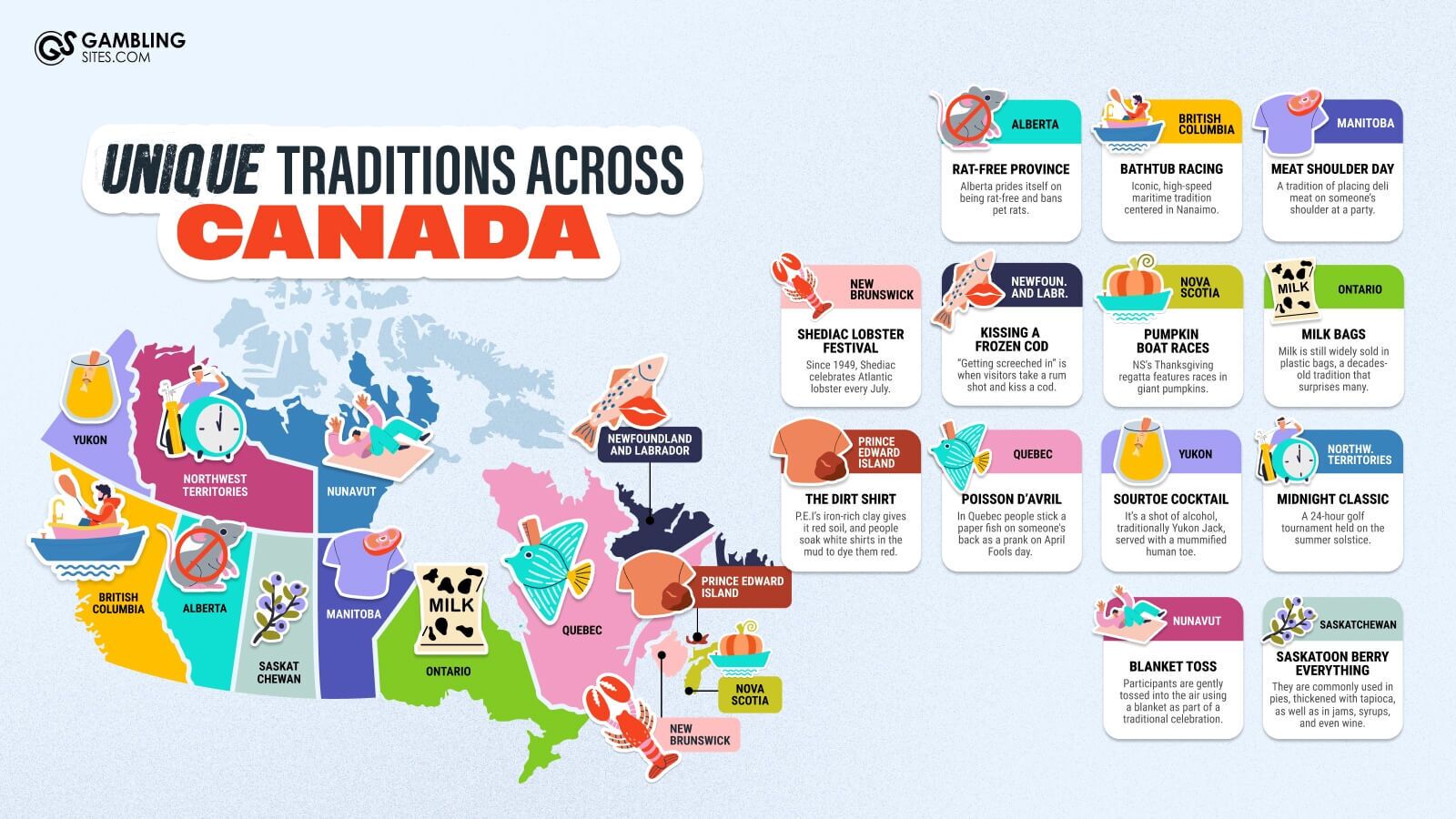
Across Canada, traditions often begin with the familiar: poutine after a night out, backyard hockey games, and festivals that bring entire towns together. But beyond these shared customs are far stranger rituals, including oddball races and some very eccentric drinking customs. One of the most bizarre takes place in Yukon, where a cocktail is served with a preserved human toe.
To explore the stories behind these customs, we examined Canada’s most unique traditions across its provinces and territories, drawing on local media, tourism sources, and community forums. We also spoke with Dawson City resident Peter Menzies, who shared firsthand insight into how the infamous Sourtoe Cocktail ritual continues to draw curious visitors.
Highlights:
- A Yukon bar serves the infamous Sourtoe Cocktail, a shot of whiskey garnished with a real preserved human toe.
- One donor famously lost three toes in the Yukon Ultra Challenge and later returned to drink the cocktail with them.
- Alberta has remained officially rat-free for more than 70 years thanks to one of the world’s strictest pest control programs.
- In Manitoba, partygoers play the “Meat Shoulder” prank by secretly placing slices of deli meat on unsuspecting guests.
The Sourtoe Cocktail: Canada’s Most Bizarre Tradition
In Dawson City, Yukon, one of Canada’s most infamous traditions is the Sourtoe Cocktail, served at the Downtown Hotel’s Sourdough Saloon (and historically tied to the venue’s casino setting). The drink consists of a shot of alcohol, traditionally whiskey, garnished with a preserved human toe. A real human toe.
How the Sourtoe Cocktail Works
Participants must drink the shot while ensuring their lips touch the preserved toe, a rule captured by the saloon’s motto: “You can drink it fast, you can drink it slow, but your lips must touch the toe.”
The toes used in the ritual are donated, often after medical amputations or frostbite injuries, and preserved in salt so they can be reused. Swallowing the toe is strictly forbidden. Anyone who does faces a $2,500 fine, a penalty that has increased over the years to protect the tradition.
A Ritual That Draws Crowds
Dawson City resident Peter Menzies has watched the ritual play out repeatedly during tourist season.
“Each night during the summer tourist season, tourist line up to do the toe. It’s something to watch. One night about 100 people showed up at the same the time — two bus loads of tourist. I watched the whole line up. People of all ages, size and interest and American. They were giddy and excited, like they were going to jump out of a plane. This goes on daily!”
For Menzies, the appeal is simple:
“It’s a lasting gag that just keeps going! People love it!” and “It’s unique – which is likely a good thing for the world!!”
The Toe’s Most Infamous Moments
Among the ritual’s most remarkable stories is that of the ultra-runner Chris Griffiths who lost three toes during the Yukon Ultra Challenge and later donated them to the Downtown Hotel. As Menzies recalls:
“A guy from England lost three toes when he competed in a winter marathon called the Yukon Ultra Challenge. He donated his toes to the Downtown Hotel. He came to Dawson one winter to drink the sourtoe with his own toes!! I was there when he did it as we put the event live on local radio — crazy, eh?”
Even the drink’s creator became part of the legend. Captain Dick Stevenson, who invented the Sourtoe Cocktail, arranged for his toes to be donated to the Downtown Hotel after his death in 2019, allowing the tradition to continue.
But keeping the ritual alive also means protecting its most important rule. As Menzies notes, your lips must touch the toe, but you must not swallow it.
“A few toes have been swallowed. An author swallowed it and paid a $500 fine. After that the fine went up!”
A Province-by-Province Look at Canada’s Quirkiest Customs
While the Sourtoe Cocktail may be Canada’s most infamous oddity, it’s far from the only tradition shaped by local history and humour. Across Canadian provinces and territories, communities have embraced customs that are as surprising as they are distinctive. Here are some of Canada’s most unique traditions.
Alberta – Rat-Free Province
Alberta is known for its strict rat control program, a policy that has been in place since the early 1950s. The province operates an active surveillance and response system along its eastern border, where rat populations are much more common. There’s no getting away from it. Residents are required to report sightings immediately. Owning a rat as a pet is strictly illegal in the province. Those that do are met with heavy fines.
Authorities even launch annual anti-rat campaigns to keep the public vigilant about rat populations in the province. It’s a good job that Ratatouille wasn’t filmed in Alberta.
British Columbia – Bathtub Racing
Have you ever thought about taking your bathtub out for a drive? Well, this is possible in Nanaimo, British Columbia where you’ll find motorized bathtubs racing across open water – just for the fun of it.
Originally launched as a promotional stunt back in the late 60s, the race has grown into a major summer attraction, drawing competitors and spectators from across Canada and dubbing Nanaimo “bathtub racing capital of the world”
How’s it done? Easy. Participants modify standard bathtubs with flotation devices and outboard motors, and pilot them along a marked marine course. The spectacle is part engineering experiment and part community celebration. If you’re in Nanaimo, and you spot a bathtub in a local garage, you’ll know it’s not for the mechanics’ afternoon scrub.
You can see what it feels like to pilot one of these tubs from the clip below!
Manitoba – The “Meat Shoulder”
In Manitoba, social gatherings sometimes come with an unexpected garnish. The so-called “Manitoba Meat Shoulder” involves discreetly placing a slice of deli meat – ham or bologna does the trick – onto someone’s shoulder without them noticing. The goal is to see how long it will stay there before they notice, or before it falls off.
It’s a little unclear as to when the practice began, but it has circulated for years as a playful party trick. Even vegans get involved in this unusual Canadian tradition!
There’s no official trophy or formal rules to this trick, it’s just timing and a bit of commitment. Manitobans certainly have a lot of time on their hands, or is it shoulders?
New Brunswick – Shediac Lobster Festival
Shediac hosts one of New Brunswick’s longest-running summer festivals and biggest communal dinners. Since 1949, the Shediac Lobster Festival has taken place each July, celebrating Atlantic lobsters with eating contests, races, live entertainments, carnivals and colossal culinary challenges. It’s a noisy few days for Shediac, though the lobsters remain tight-lipped.
To accentuate the province’s love for the crustaceans even further, the town has erected a giant lobster statue measuring around 11 metres long and weighing around 90 tonnes. It’s recognised as the largest lobster statue in the world, and has become a landmark for visitors and a focal point for photos during the festival.
For this coastal community, the Shediac Lobster Festival is as iconic as Disneyland; the footage below captures the atmosphere first hand.
Newfoundland and Labrador – Getting “Screeched in”
In Newfoundland and Labrador, visitors can earn honorary local status through a ritual known as “getting screeched in.” The ceremony typically takes place in pubs and involves taking a shot of Newfoundland Screech rum, answering the host’s question in local dialect “Is yes a screecher?”, eating a piece of bologna, and, wait for it, kissing a frozen cod.
This strange Canadian tradition is rooted in the province’s fishing heritage and strong sense of identity. It blends ritual and a tad of innocent humour. Participants are even handed a certificate to mark the occasion – whether that’s issued in full seriousness or as part of the ongoing joke is left open to interpretation. As one colleague who completed the ritual recalled:
“The screech burned my throat, the frozen cod stared straight into my soul, and I’m still not sure how many lips touched that fish before mine – but I survived. Proud to be an Honorary Newfoundlander.”
Nova Scotia – Giant Pumpkin Regatta
Each Thanksgiving weekend, huge hollowed-out pumpkins are taken to the water in Nova Scotia’s Giant Pumpkin Regatta, held in Shelburne’s historic waterfront. Participants carve and scoop out the pumpkins that can weigh up to 1,000 pounds (or more) before climbing right inside to race the pumpkins across the lake.
The event began in the early 2000s as a local competition and has grown into an annual spectacle that draws visitors from across the region. It’s part harvest festival, part endurance test, and mostly just a lot of fun.
The wider event includes the Shelburne Gold Market, a timber show, bouncy houses and more activities. But the main draw is the pumpkin race itself, as competitors steer their oversized harvest down the waterfront course.
This short captures the spirit of the day!
Ontario – Milk in Bags
In Ontario, milk is commonly sold in plastic bags rather than cartons, jugs, or glass bottles. The practice dates back decades, around the 60s/70s, during Canada’s transition to the metric system and the change in packaging regulations. While most other provinces moved away from bagged milk, it still remains standard in many Ontario households.
Day-to-day, the bags are usually placed inside reusable pitchers, and the corner is snipped before pouring. For locals, it’s just routine. For visitors, it often requires a quick demonstration and maybe a short explanation as to why this is the case.
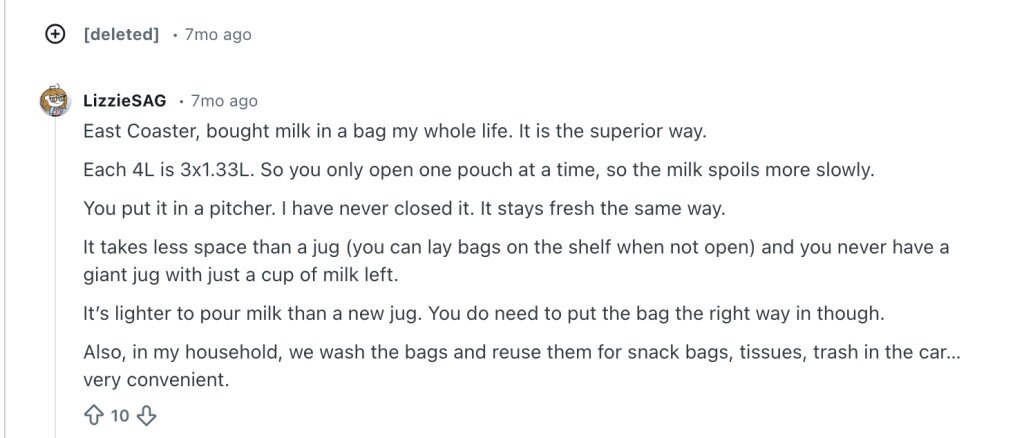
Reddit user LizzieSag steps in to defend Canada’s bagged milk tradition, answering the question many outsiders ask: why bags, and what’s it actually like to use them day to day?
Quebec – Poisson d’Avril
Each April Fools’ Day, many in Quebec take part in “Poisson d’Avril,” which literally translates to “April Fish.” The tradition involves secretly taping a paper fish to someone’s back without them noticing. Adults and children alike get involved, shouting “Poisson d’avril!” when the prank is discovered.
The custom traces back centuries to French roots and has remained widely recognised across schools, workplaces, and homes. The aim is simple: attach the fish unnoticed and wait for the reveal. It’s very simple but the joke tends to stick.
Methodology
This study set out to identify one distinctive tradition from each Canadian province. We began by reviewing regional news outlets, local archives, tourism resources and event listings to map out established customs and long-running practices.
To capture traditions that may not appear in formal guides, we also closely monitored forums such as Reddit and surveyed Canadians from each province for regional insight. To further validate, each example was then verified against multiple published sources to confirm accuracy and historical context.
Final Thoughts on Canada’s Strangest Traditions
Canada’s strangest traditions reveal just how differently each province expresses its identity. Some stem from policy, others by history, and many by a distinctly Canadian sense of humour. Together, they remain firmly embedded in local culture, reflecting the diversity of customs that define communities across Canada.